


We met in 2021 while traveling in a Karen hill tribe homestay called Ker Lee Glow. Since the end of March 2024, we have been traveling together and sharing this journey through life. We consider ourselves experience designers, creating meaningful events and overnight experiences across Thailand. Each experience is inspired by the people we meet, the places we visit, and the stories we encounter. Every experience is unique because every person and place has its own distinct qualities. We also provide customised experiences shaped by what people truly desire.
Traveling is not just a pastime for us; it’s the way we live and learn. Through our journey, we have discovered that we can serve as a bridge—connecting people to one another and to nature. We believe in letting things unfold naturally through the activities we design, creating space for connection and reflection. Over the past year, we have spent most of our time in northern Thailand, particularly enjoying our stays with hill tribe families. We have learned from their simple way of life, which exists in harmony with nature. This experience has beautifully and humbly shifted our perspective on life.
Tangmo is a Thai artist whose work is deeply rooted in community connection, ecological awareness, and personal storytelling. Born to a farming family in the eastern coastal region of Thailand, she studied Art Education at university and her creative journey began through years of hands-on work across Thailand, where she served as an education coordinator and later as a project manager for responsible tourism and community development initiatives on Samui Island and in Chiang Mai. From 2014 to 2018, she worked closely with local schools, elephant care centers, and hill-tribe communities—especially the Karen people—whose ancestral knowledge and close relationships with elephants profoundly shaped her worldview.
In 2019, Tangmo left the corporate sector to explore these themes more independently. She began sharing her experiences and insights through writing and small community actions, raising funds to support elephant welfare and local mahouts during the COVID-19 crisis. This period of self-directed learning laid the foundation for her transition into art-making.
In 2021, she launched PRATABJAI, a painting project inspired by fleeting moments, emotions, and personal encounters during her travels. Starting with hand-drawn images, the project evolved into DIY coloring sets and custom-made designs created in collaboration with others—turning art into a form of shared healing and memory-making. Tangmo’s work is characterized by soft, impressionistic gestures and abstract forms, often made using reclaimed materials and natural pigments.
Alongside her art, Tangmo continues to contribute to alternative education, permaculture, and community-based experiences. She has facilitated creative workshops in rural and coastal settings, where painting becomes a tool for reflection and emotional expression. Whether hosting intimate gatherings or participating in collective events like Ting Tae Kep ("Let Go, But Keep"), Tangmo’s practice is an ongoing exploration of how art, nature, and dialogue can gently transform how we relate to ourselves and the world around us.
Nakrapas Mahom is a Bangkok-born artist and facilitator whose work explores emotional openness, communal reflection, and the value of simple living. After years of solo travel across Thailand—funded through an unexpected start in shrimp medicine sales — Mahom immersed herself in the everyday rhythms of rural life. Her time living with villagers and participating in local traditions, such as rice harvesting with the Karen community in Chiang Mai, deeply shaped her understanding of belonging, slowness, and care.
In 2023, she created her first immersive retreat, Peace Addict Lv.3, a 3-day experience in a forest home in Mae Chaem, designed to reconnect participants with nature and local food practices. That same year, she founded ThruToThought_Bar, a gentle, open-ended space where strangers gather to talk, reflect, and share emotions without judgment. With themes drawn from everyday life, this ongoing project offers a space to feel heard, accepted, and transformed—sometimes with snacks or drinks, always with presence.
Through her projects, Mahom builds quiet containers for connection, recognising that healing often starts with simply being listened to.
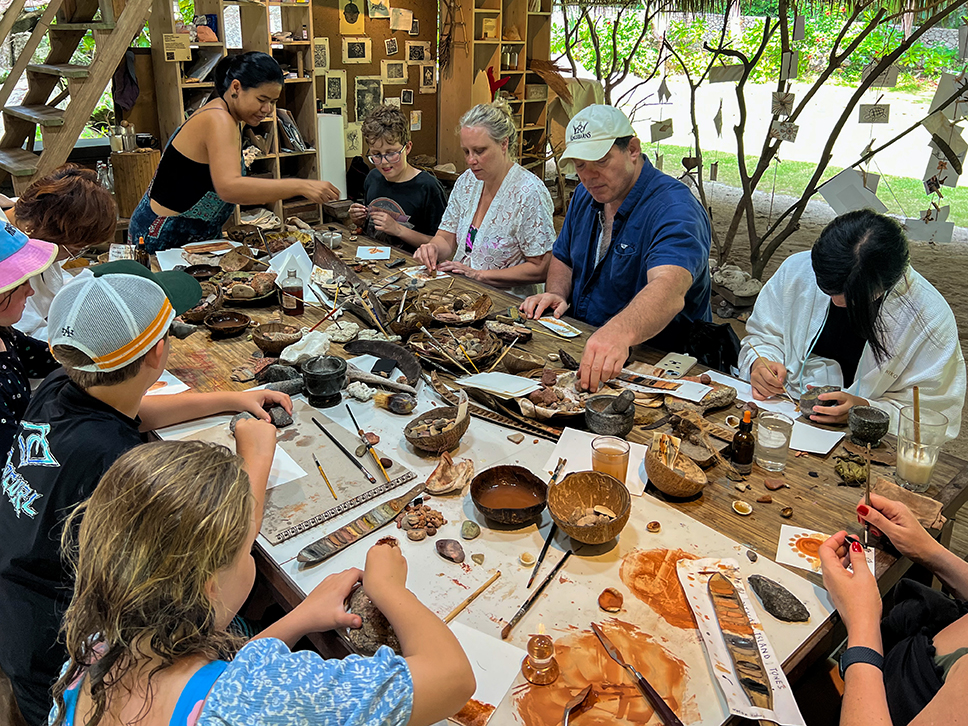
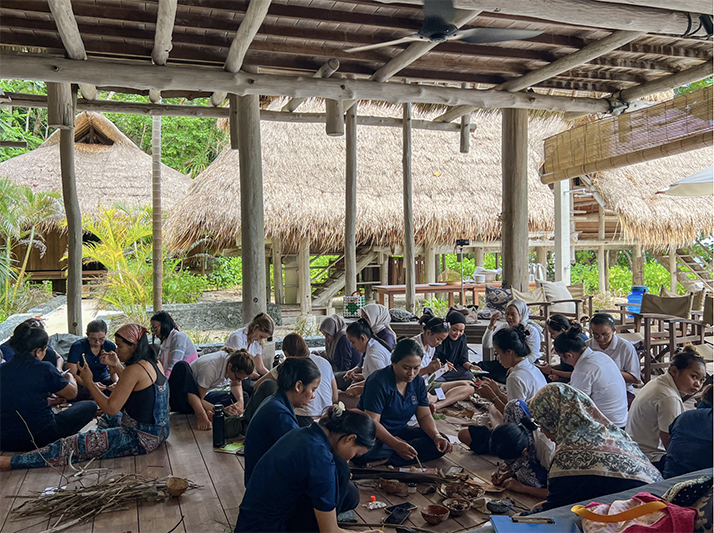
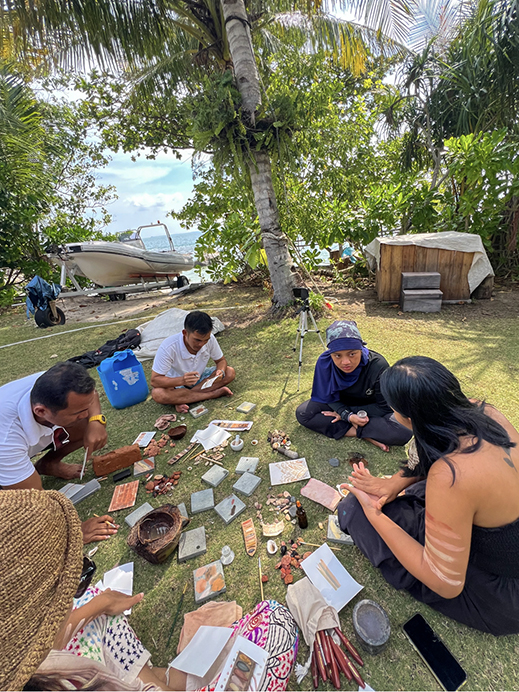
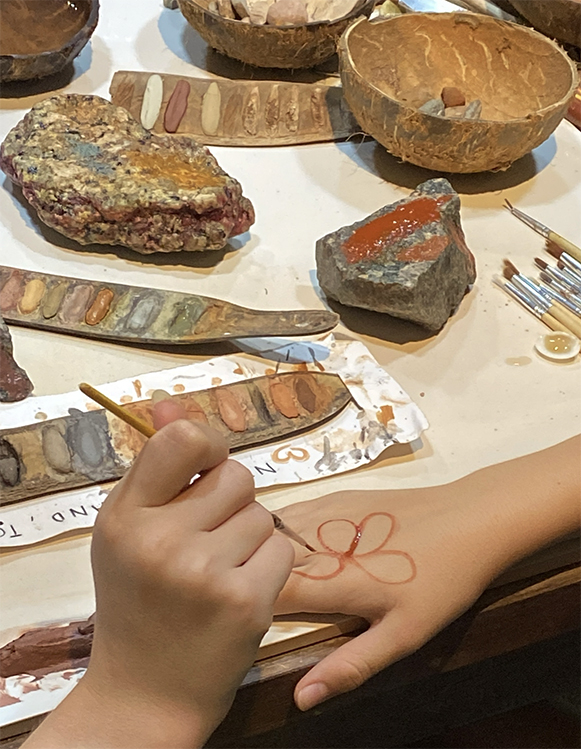
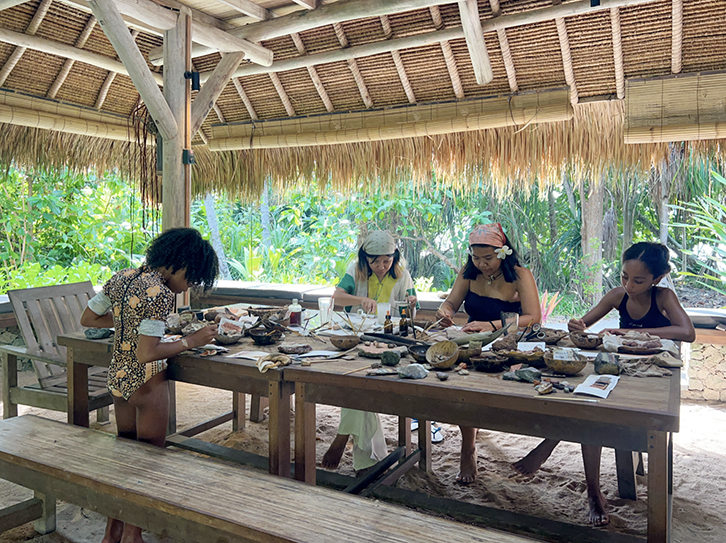
On Nikoi, most of the stones we found were along the beach and there weren’t many of them. The colours leaned mostly toward warm oranges. We discovered some charcoal that worked well for black pigment. To explore more shades, we experimented by mixing the stone powders with ground seashells and dead coral. Before using seashells or coral, we soaked and washed them 4–5 times to remove the limestone, which made the powder mix better and stick more smoothly to surfaces. After drying the powders gave a surprisingly bright white, which we could use to adjust tones from stones color and other material we found. We also collected clay from the jungle to make additional colors.
Exploring the island was an important part of our process. We walked along the shore during both high and low tides, noticing how the exposed areas changed and revealed different stones and earth each time. The materials we found were not abundant, but each piece felt special different from anything we usually see in northern or central Thailand. The excitement of discovering a new stone or clay, the curiosity about how it might behave as a pigment, and the desire to experiment kept growing with every walk and conversation with friends on the island.
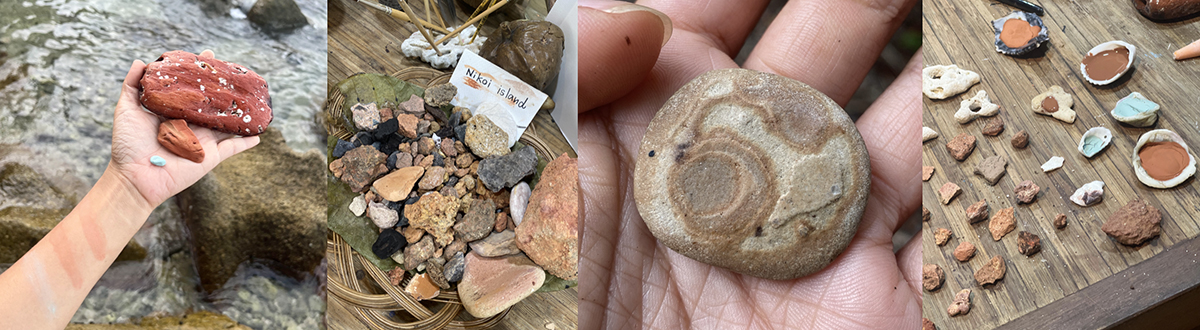
On Cempedak island, we found a wider range of stone colors along the beach, mostly oranges and browns, but with some reds and yellows as well. The locals told us these were bauxite stones, washed down from the main island, Bintan. In Bintan, the variety of stones and clays was even greater and we collected some of these materials to bring back to Nikoi for further experiments with watercolours.
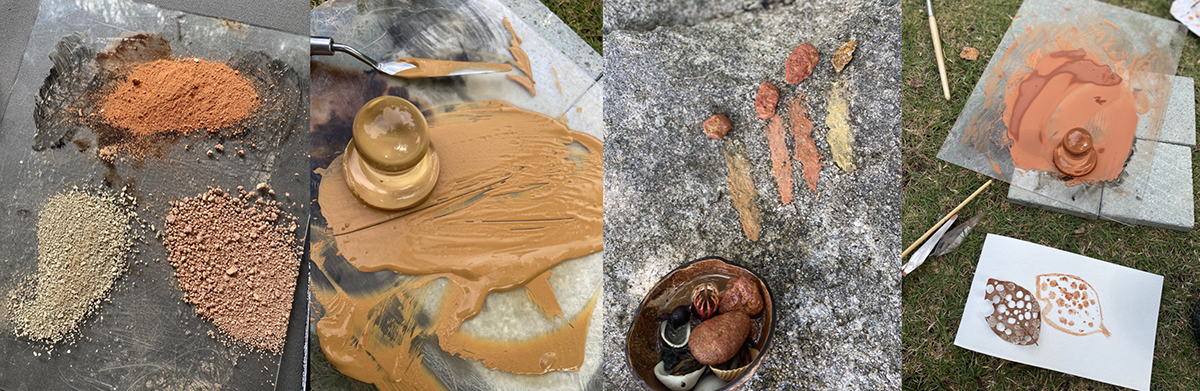
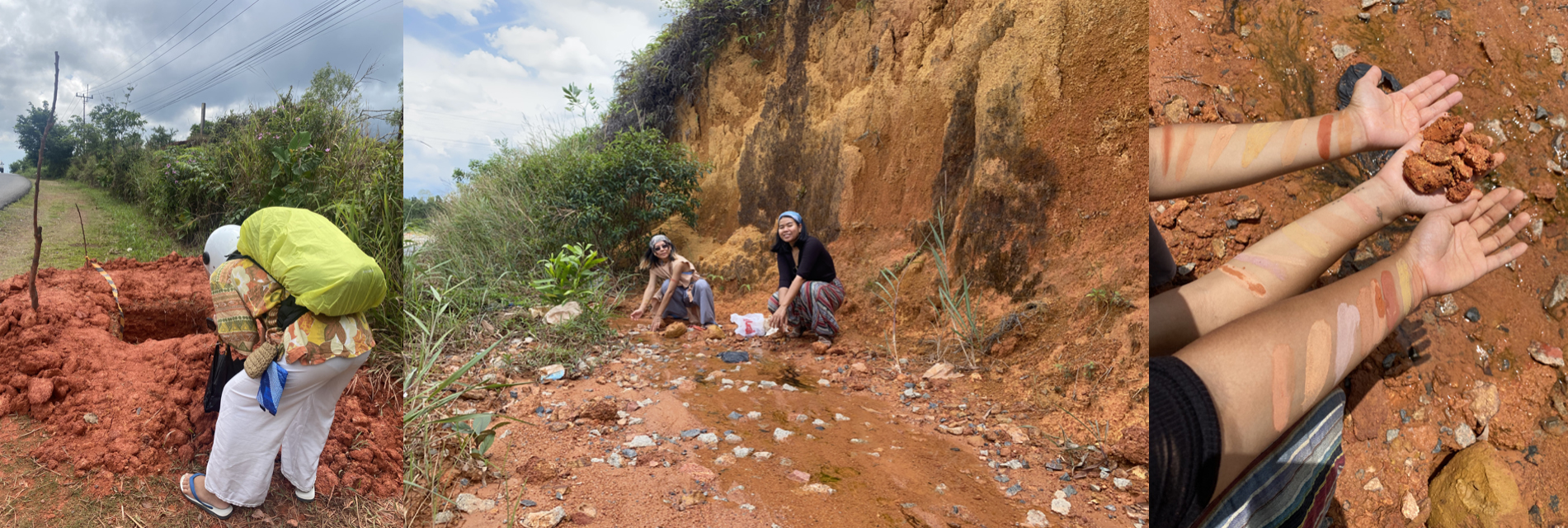
Through this process, we not only learned about the materials but also about the islands themselves. Each place offered a distinct palette, a sense of mood and a connection to the land. Working together, exploring and testing the materials deepened our understanding of nature, the islands, geology and the possibilities of transforming natural elements into art. Every walk, conversation and experiment became part of the artwork itself, teaching us patience, observation and care for the environment.
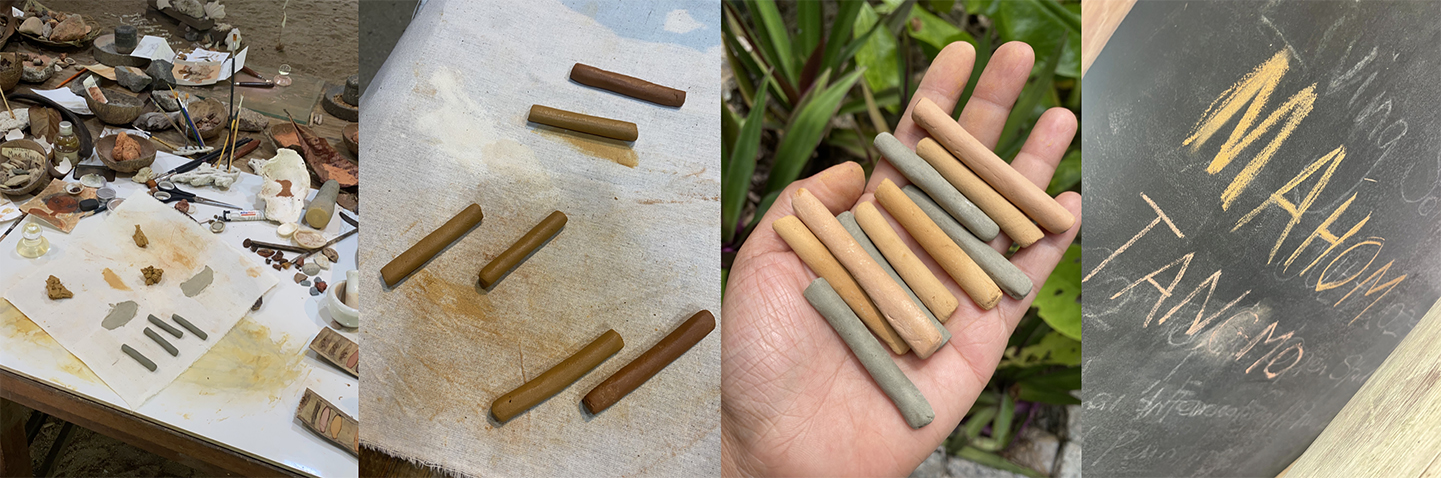
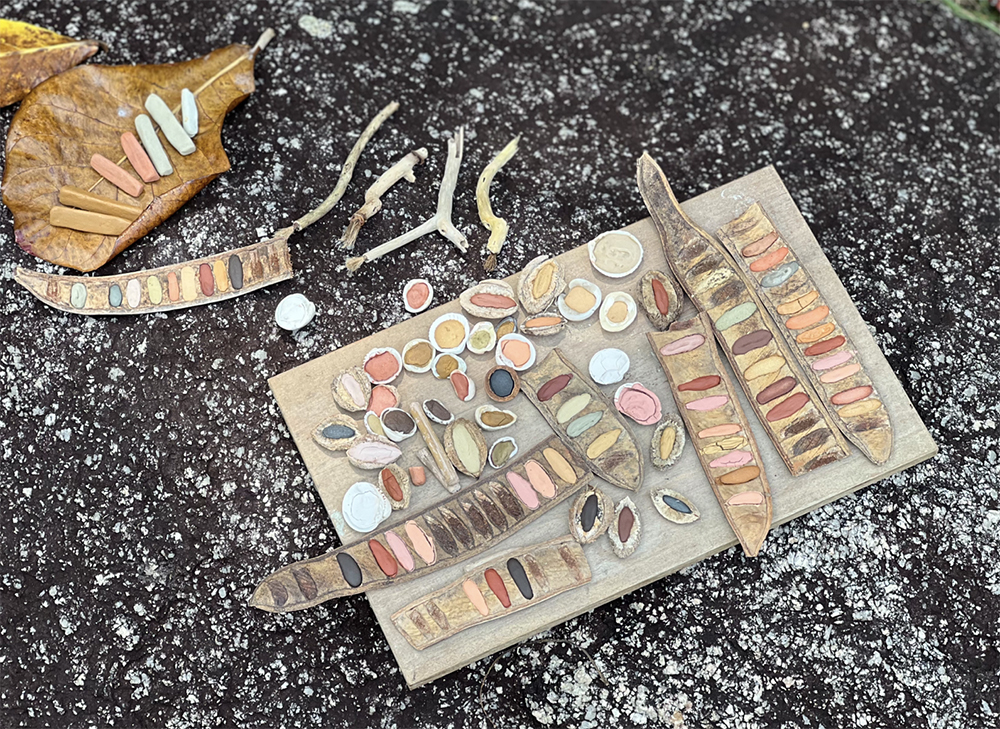
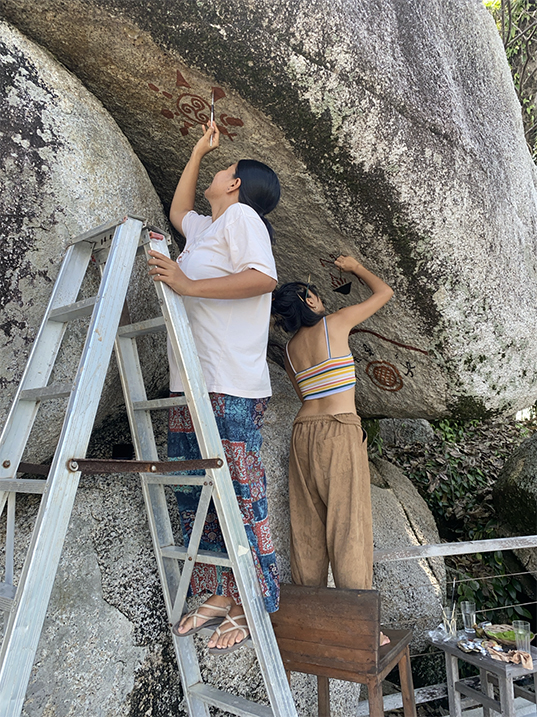
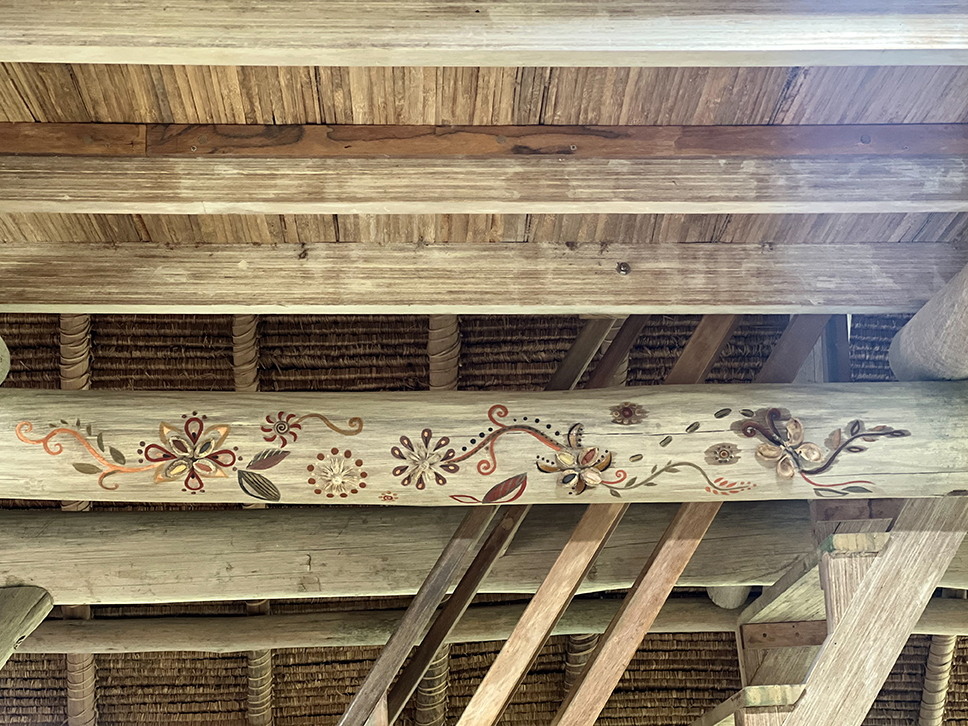
We decided to create our final paintings directly on stones and wood around Nikoi island five spots in total. Because of the rough and sometimes humid surfaces, we needed to make our own natural gesso from the materials and tools we had on the island. The gesso helped create a base layer so the paint wouldn’t sink too deeply into the stone or wood. We researched how traditional natural binders work, especially in old tempera and fresco methods for our artwork.



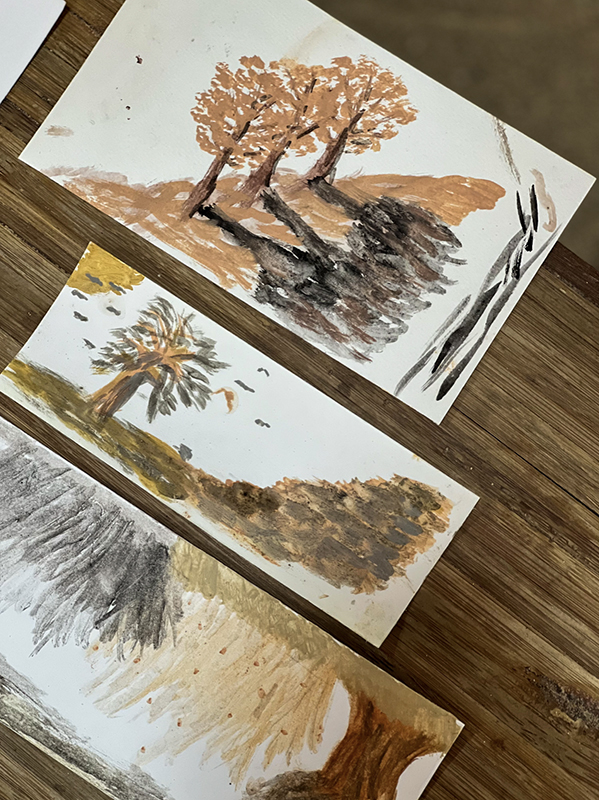

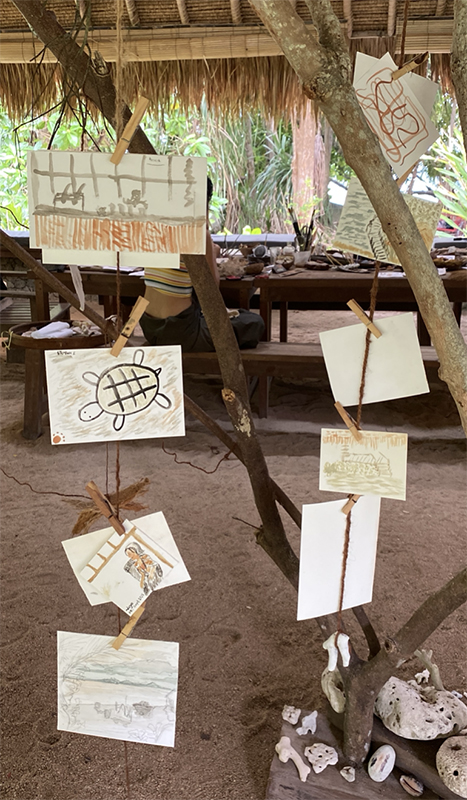

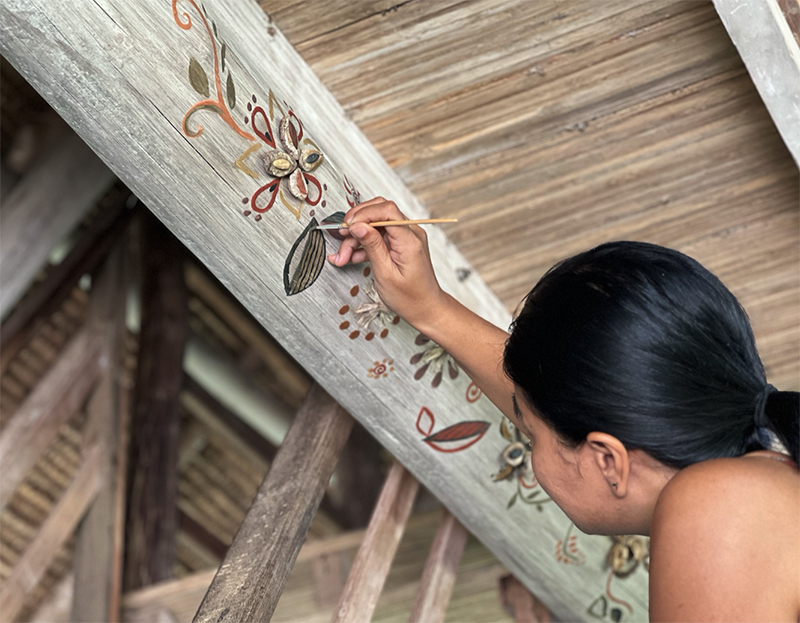
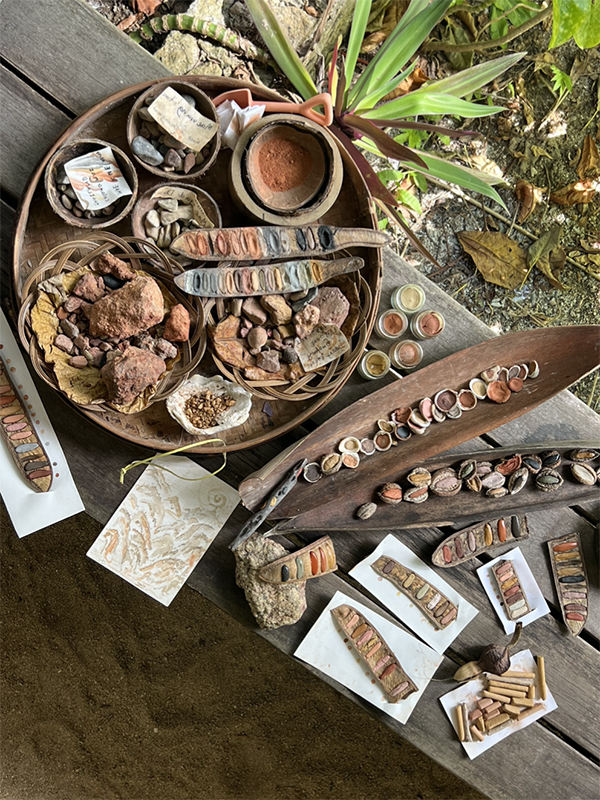


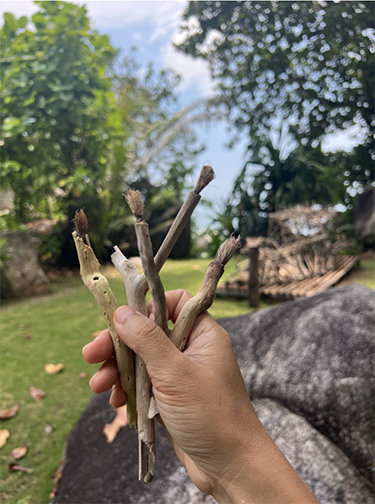
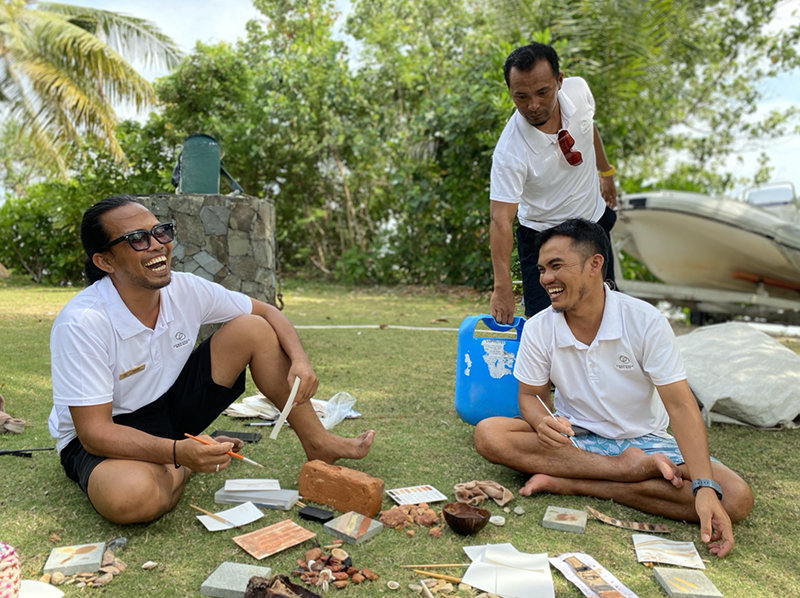
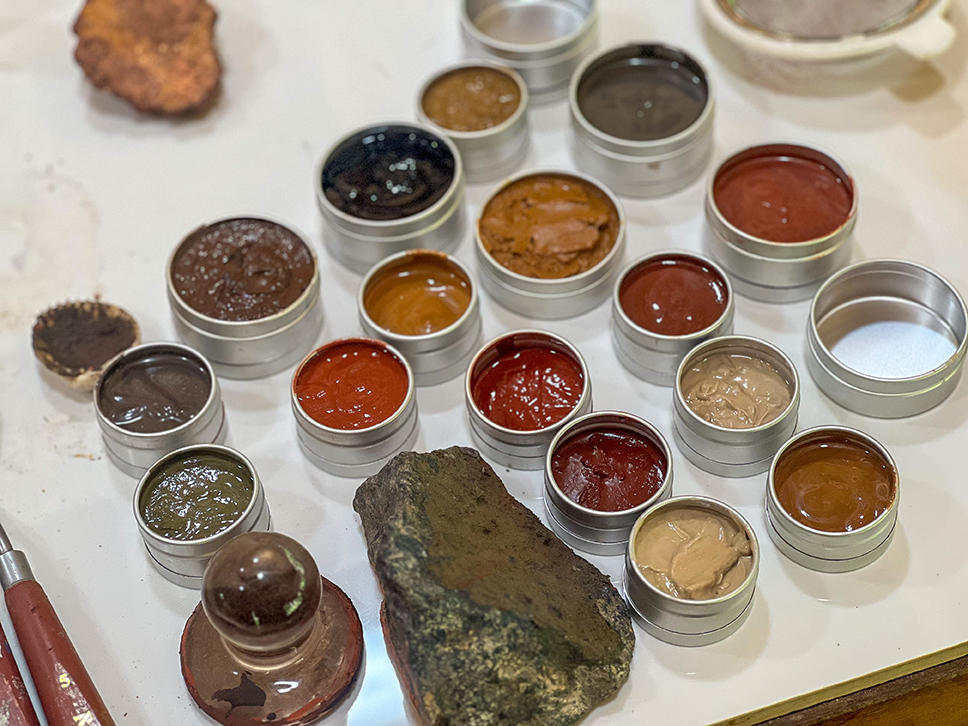
Working with natural pigments from stones has transformed how we approach art. Each pigment has its own character, no two mixes are ever the same. Learning to embrace this uncertainty allowed us to let go of expectations and enjoy experimentation for its own sake. We discovered that creativity thrives not on control, but on curiosity, adaptability and joy in the moment.
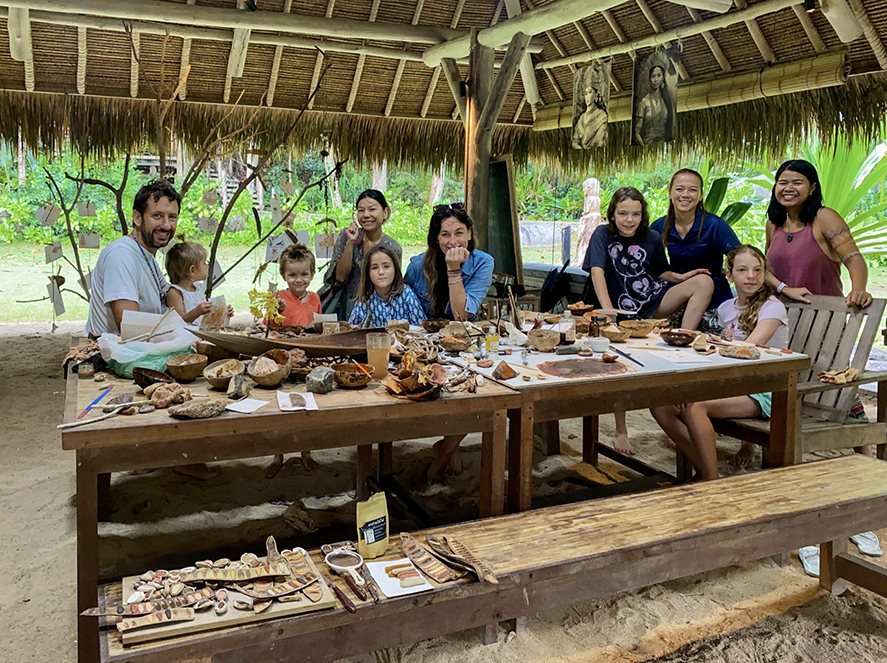
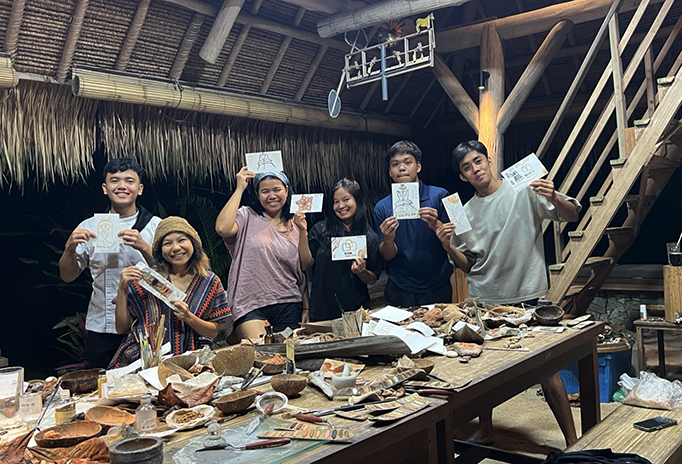
Running workshops reinforced this lesson. Guests were often surprised by how simple pigments could produce such expressive art. Watching their transformation from hesitance to being proud and joyful reminded us that creativity reconnects people not only with nature but also with themselves. Some guests returned multiple times, even helping crush stones or bringing natural materials to enhance the exhibition. These interactions formed a web of connection across the island, linking guests, Nikoi staff and the environment into one creative ecosystem.
Beyond artistic growth, this residency deepened our understanding of sustainability and eco-conscious living. Observing the island’s ecosystems, wildlife and human interactions highlighted the interdependence of all things. Back in Thailand, we now think more carefully about what we eat, plant, create and consume, striving to live in balance with our environment.
We also learned a lot about collaboration working together as a duo, sharing ideas and responding to each other’s suggestions. Experiencing the islands, the local communities and their ways of life expanded our perspective on art, research and how creativity can interact with culture and nature.
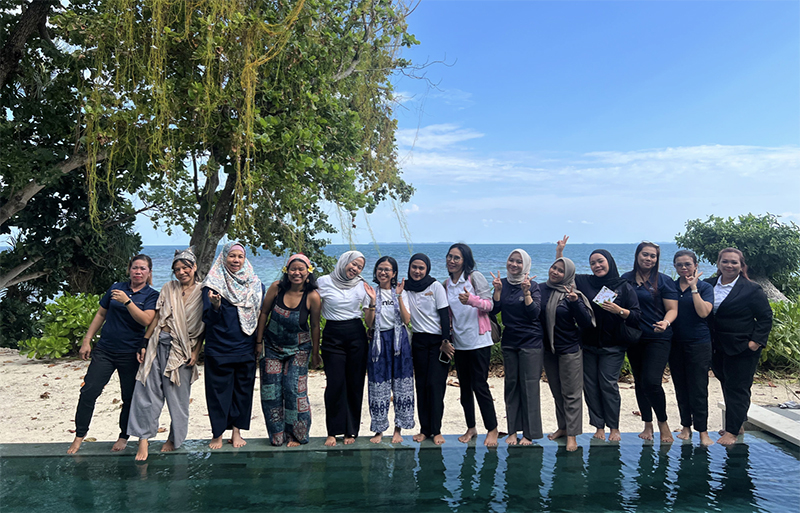
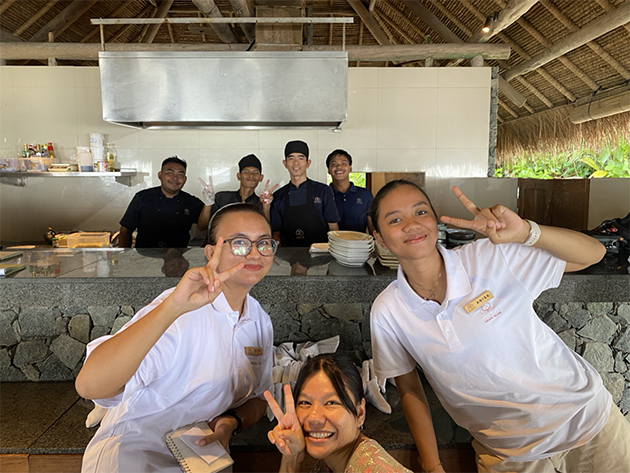
Our experience would not have been the same without the incredible staff of Nikoi. Each person brought unique skills and wisdoms.




This series of five paintings, created directly on wood and rocks using natural watercolours and oil colours made from stones from Nikoi, Cempedak, and Bintan, captures moments of life, play, and nature on Nikoi Island. Inspired by ancient cave paintings, local wildlife, and daily island activities, each piece tells a unique story and invites you all to explore, reflect, and connect with the rhythm of island life.
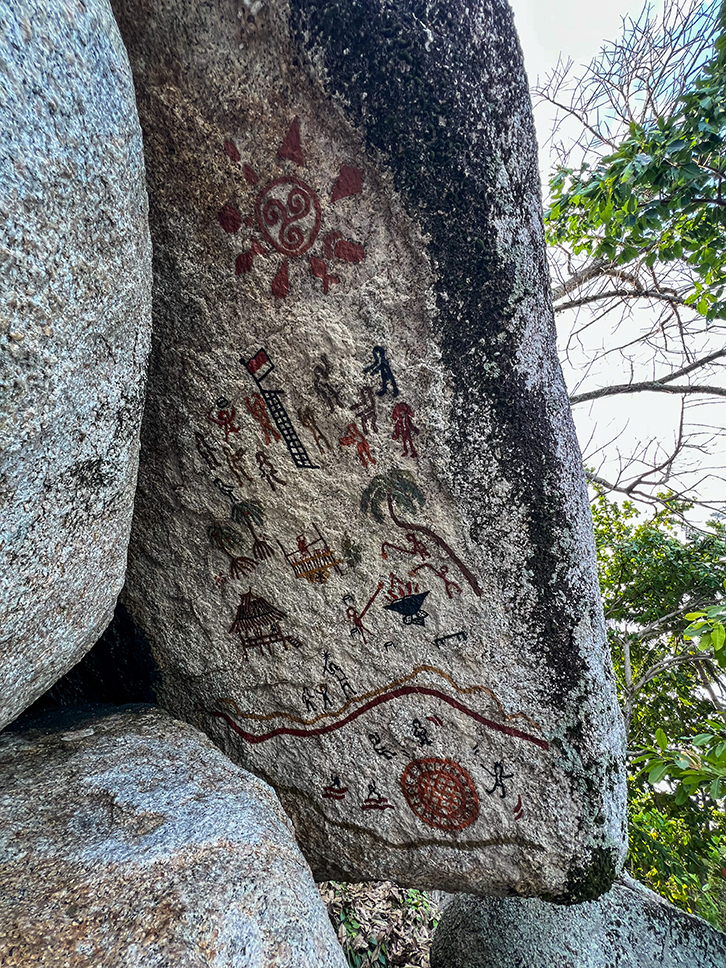
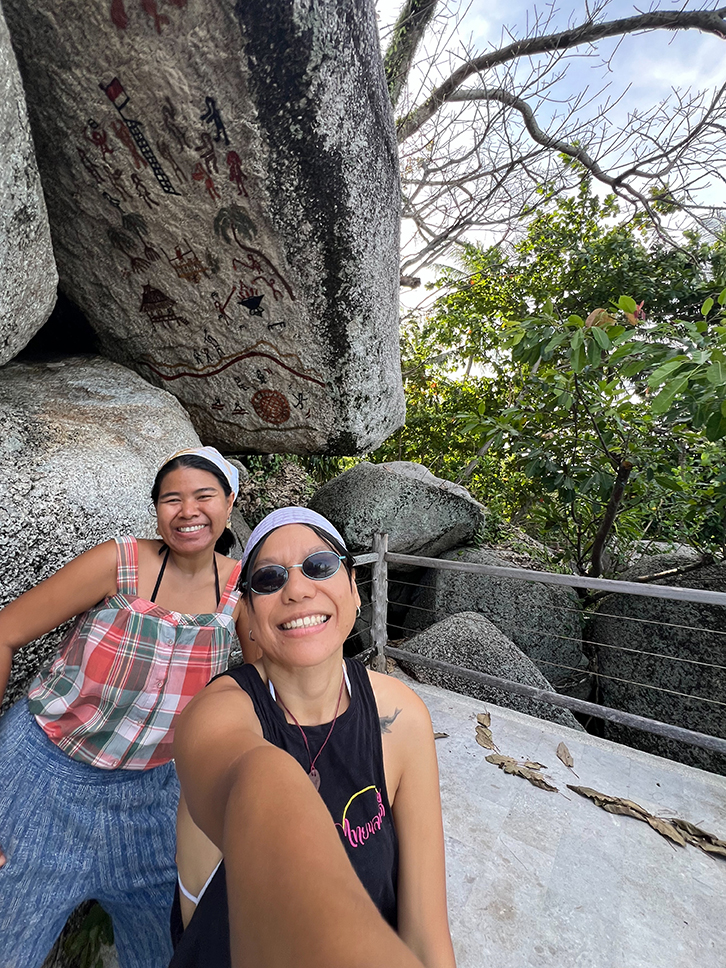
One of our final works is an oil painting made from stone pigments, created on a large rock. The drawing is made with simple lines and flat shapes something close to early cave paintings found in different parts of the world. We used several shades of stone-based oil colours to build the image. For this piece, we wanted to tell the story of all the activities shared between the two of us, the guests and the Nikoi team. Beyond connecting with nature on the island, we felt a strong sense of connection with the people here through everyday moments snorkelling, doing jetty jumps, playing volleyball, making drinks, sitting by the bonfire roasting marshmallows and many more small activities. These experiences helped us understand human relationships within this environment in a deeper and more layered way.
Even more importantly, the people on the island opened a door for us to learn about different local cultures in Indonesia through their backgrounds, their stories and the ways they live. Meeting new friends and hearing their perspectives became another meaningful part of our journey here.
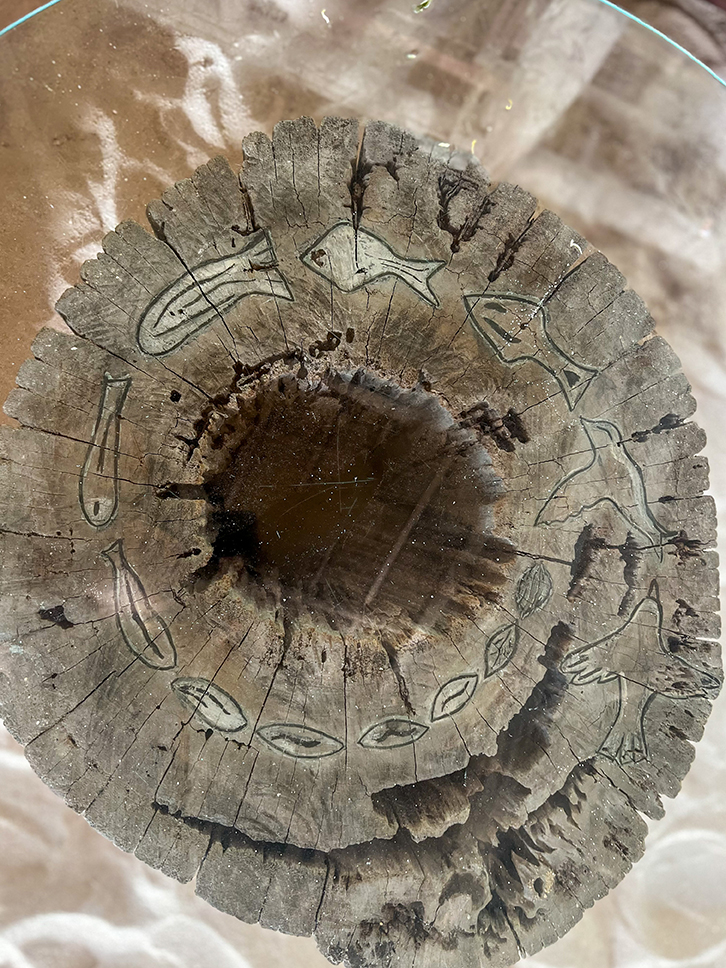
This painting on a floating log is a visual representation of the "Circle of Life" gently drifting to remind viewers that all existence is one unbroken, ever-changing whole in constant, natural motion. It starts with the 'Code' of life hidden within a tiny sea almond seed beneath the earth. This code then blossoms, splitting into leaf forms and basic cellular structures. The life force then dives into the underwater world, transforming into a diverse array of fish. Finally, it soars upward, taking flight as birds.
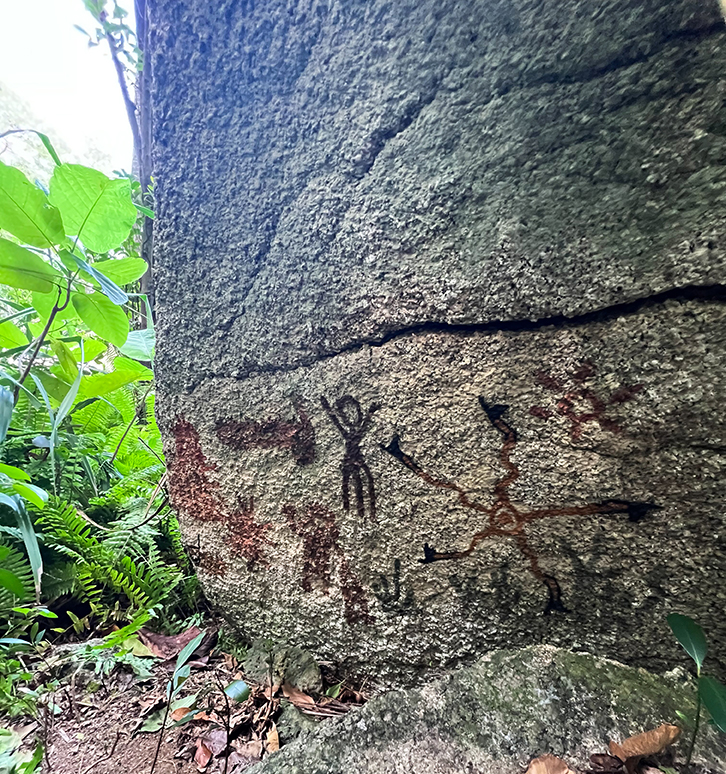
This series of paintings reflects life on Nikoi Island, capturing small moments and personal perspectives from our time exploring the island. Each piece is inspired by the wildlife we encountered, the natural surroundings and the playful interactions we shared with both the environment and the people around us. All paintings were made using handmade pigments: stone-based oil colours and charcoal pigments, which we prepared ourselves during our stay.
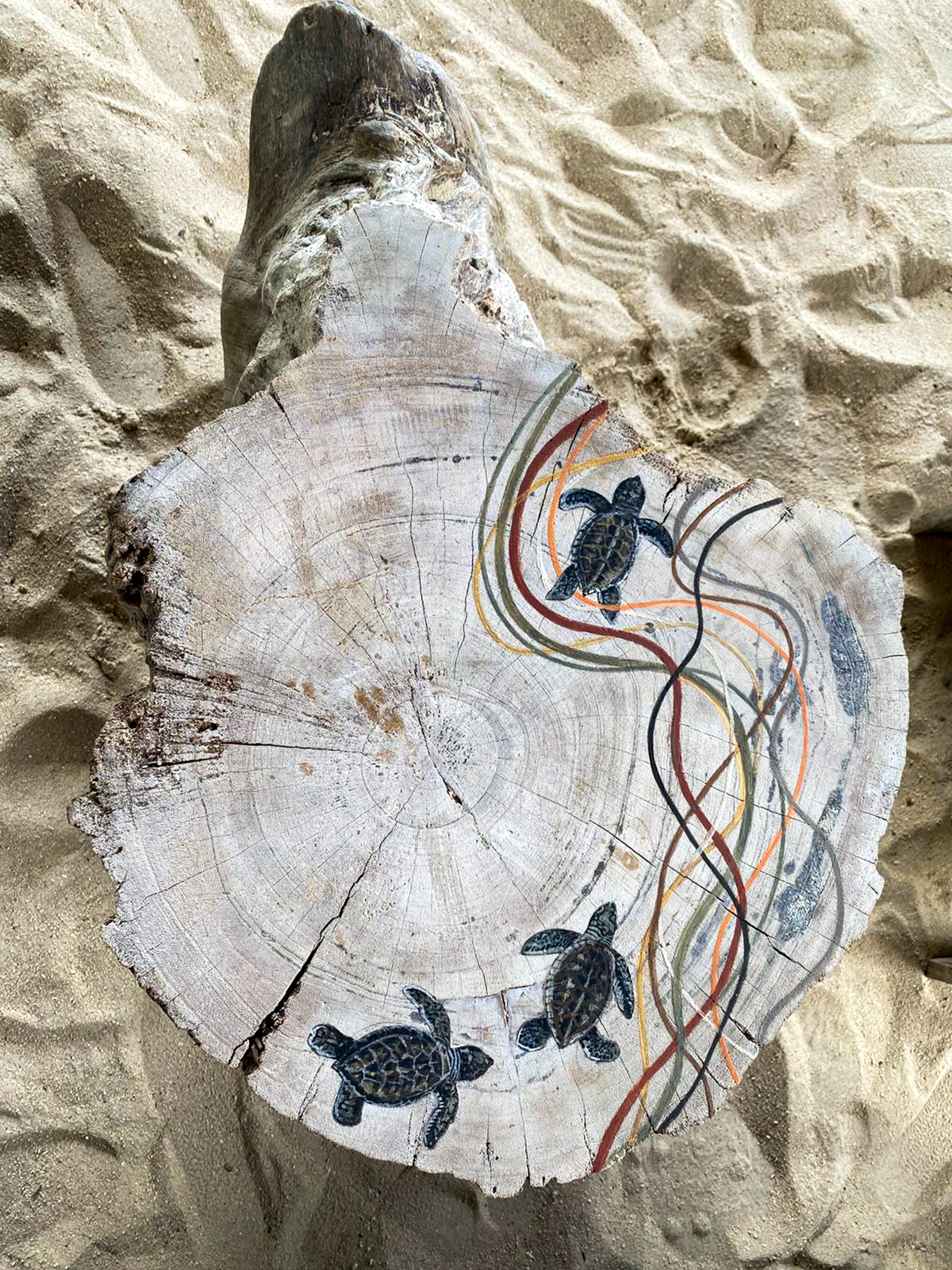
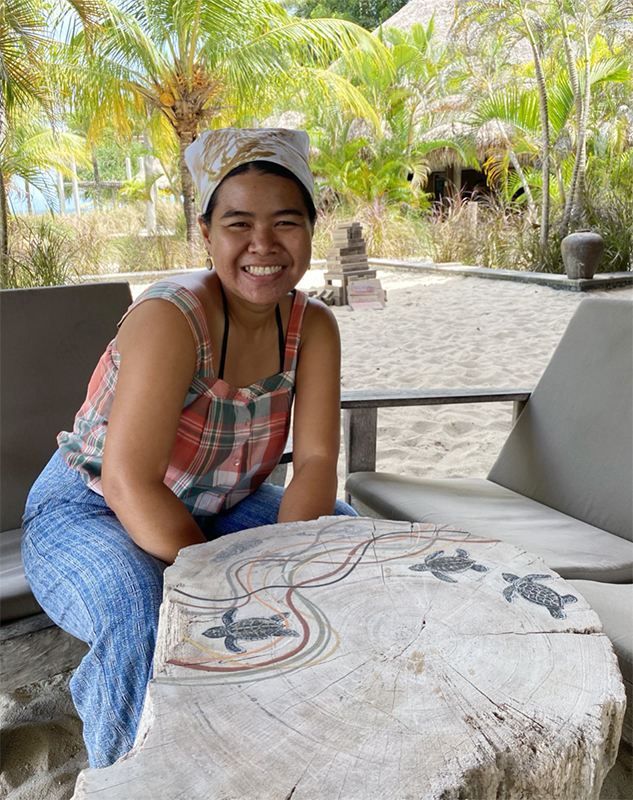
We used natural watercolours on wood to show three little Hawksbill sea turtles. The colourful lines and soft shapes are meant to show the excitement and innocence of their very first moments in the world, taking their first steps toward the big ocean that is their home.When we were on Nikoi, we often saw turtle eggs and hatchlings. Every time we watched the turtles walk bravely to the sea and swim freely, it gave us a really strong feeling like energy and wonder all at once. Tangmo was moved by their courage and freedom, while Mahom noticed how small but determined each step was. It made us both think about how life and nature exist together on the island.Tangmo painted this piece realistically to test the natural stone pigments seeing how many colours and shades we could get and how much depth we could create with our own skills. After finishing, we were both amazed at the pigments from the stones. They let us capture the tiny details of the baby turtles softly and naturally, while keeping the gentle, natural feel of watercolour.


Ubah Rumah is an art residency and archive inspired by stories of our region.


