


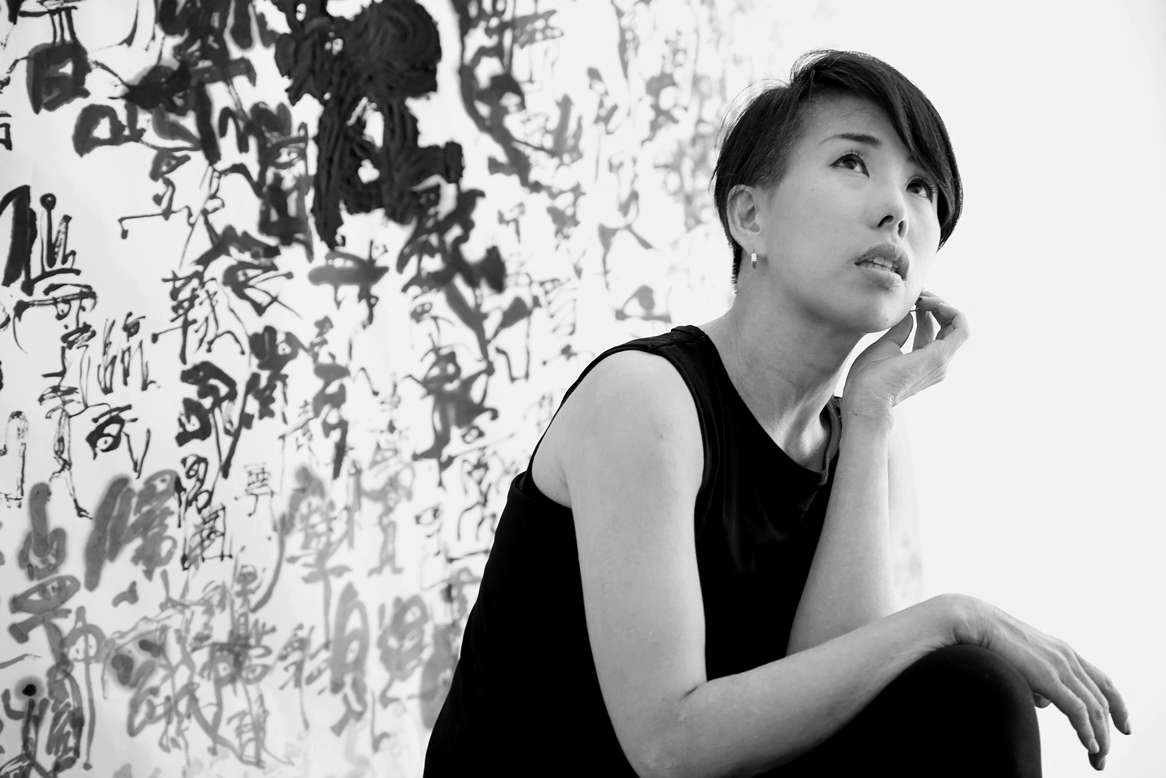
Soufu Honda (born 1981) is a calligraphy-based artist whose practice draws deep inspiration from nature. Through the flow of the brush and the bleeding of ink, Soufu seeks to express the layered vitality and the passage of time inherent in natural phenomena.
Based between Hokkaido (Asahikawa) and Tokyo, and previously Johor Bahru, Malaysia, Soufu has held solo exhibitions, performed calligraphic performances internationally, and collaborated on design projects — ranging from corporate lettering and store logos to interior art.
I propose to create a series of large-scale calligraphic installations deeply rooted in the landscapes and natural environment of the residency location.
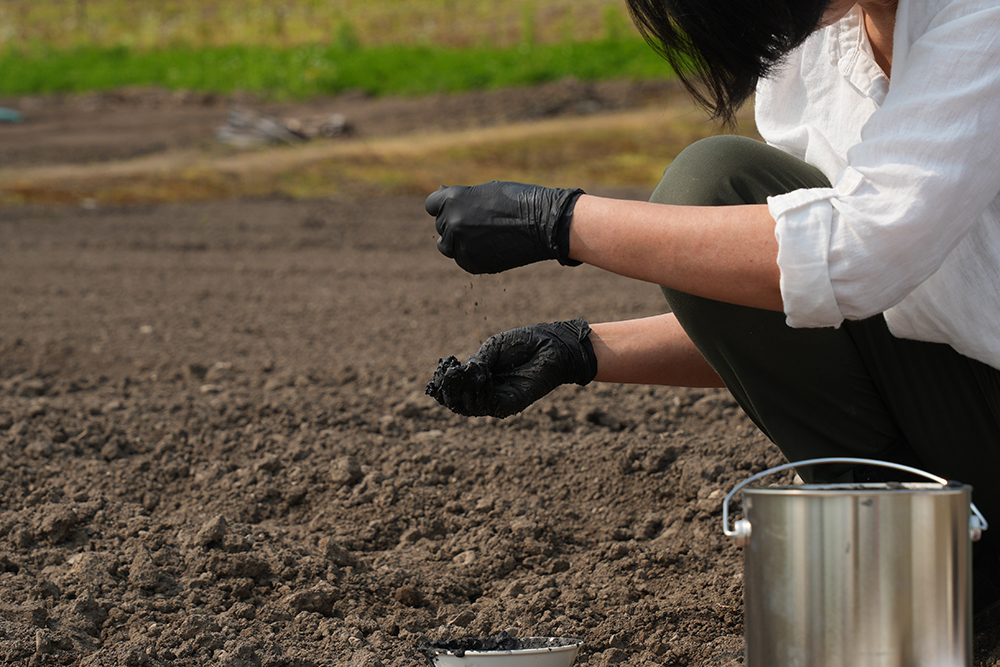
Drawing from my established visual language—where brush strokes and ink flows reflect organic forms such as tree branches, frost patterns, or fungal growth—I will specifically explore how to create original ink by utilising local materials such as sand and earth from the site. I aim to infuse the artworks with the very geology and energy of the land through this unique, site-specific pigment.
While I usually work on paper, I plan to expand my expressive range by challenging myself to use tree bark and rocks as canvases for the calligraphy. This process will allow me to explore how the local flora, light, and seasonal changes influence shape, rhythm, and structure in the work. The installations could occupy walls, walkways, or outdoor surfaces, allowing the environment itself to become an integral part of the artwork.
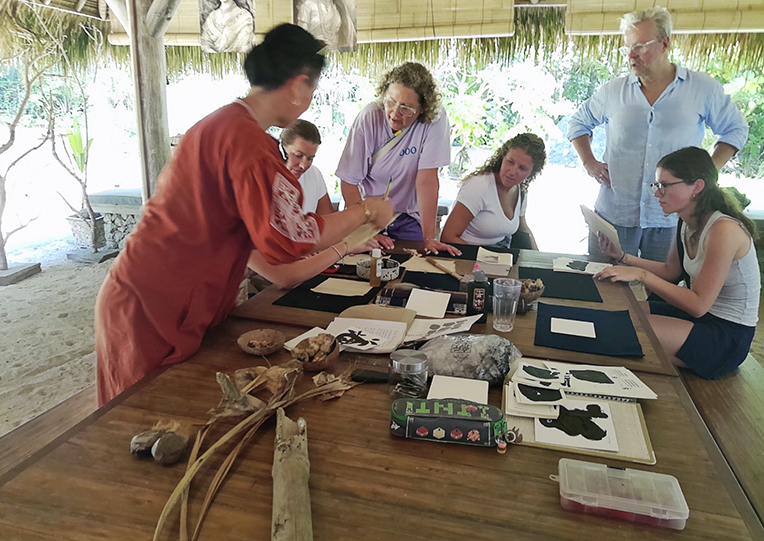
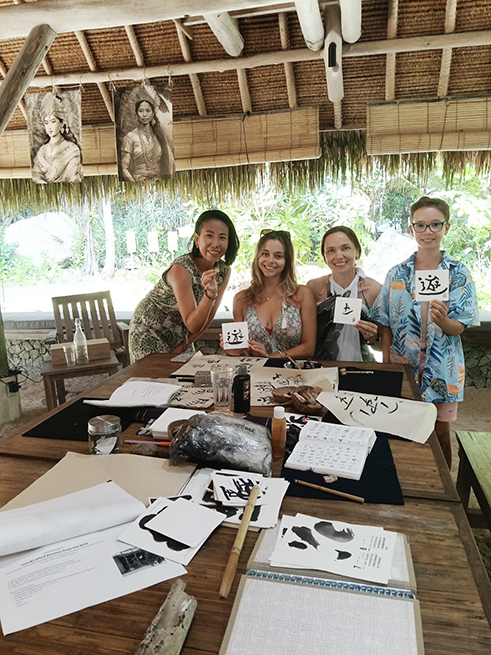
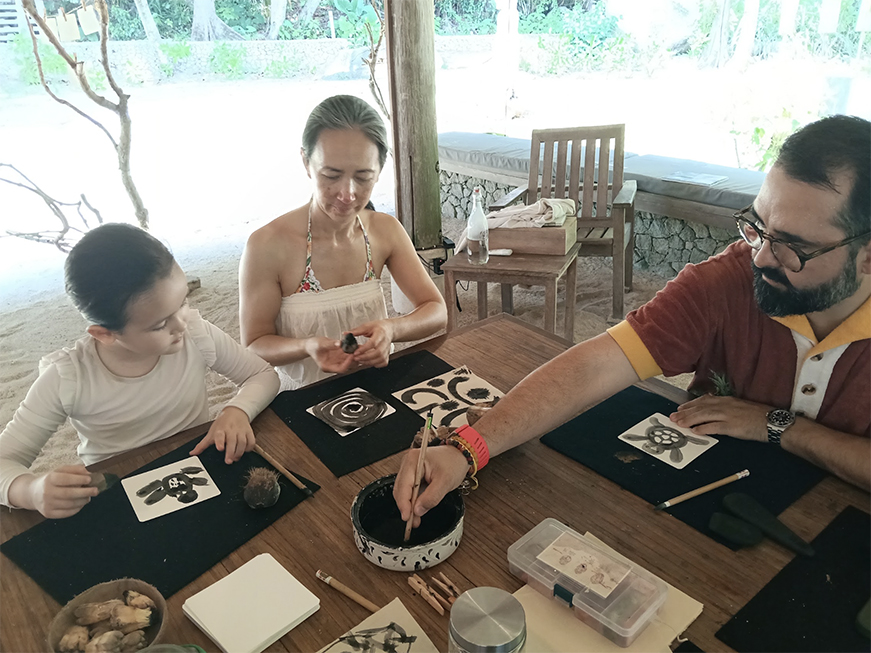
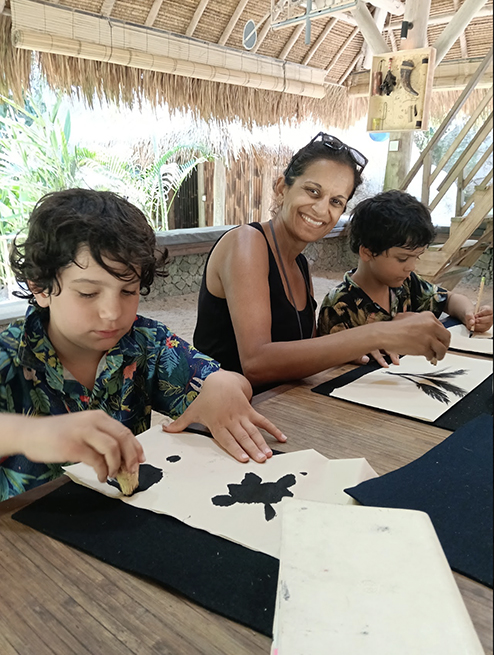
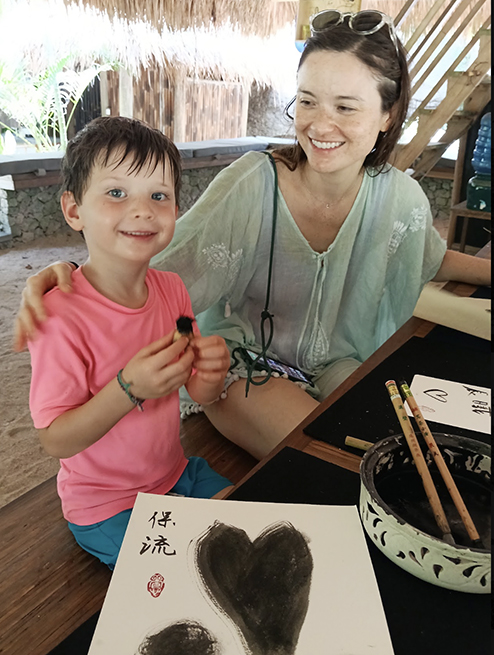
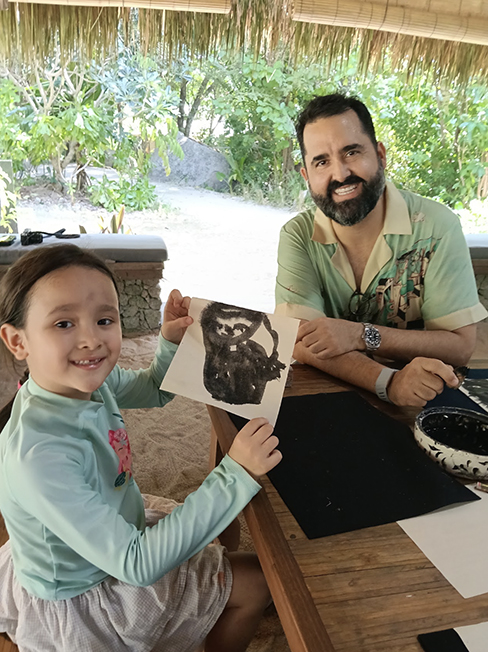
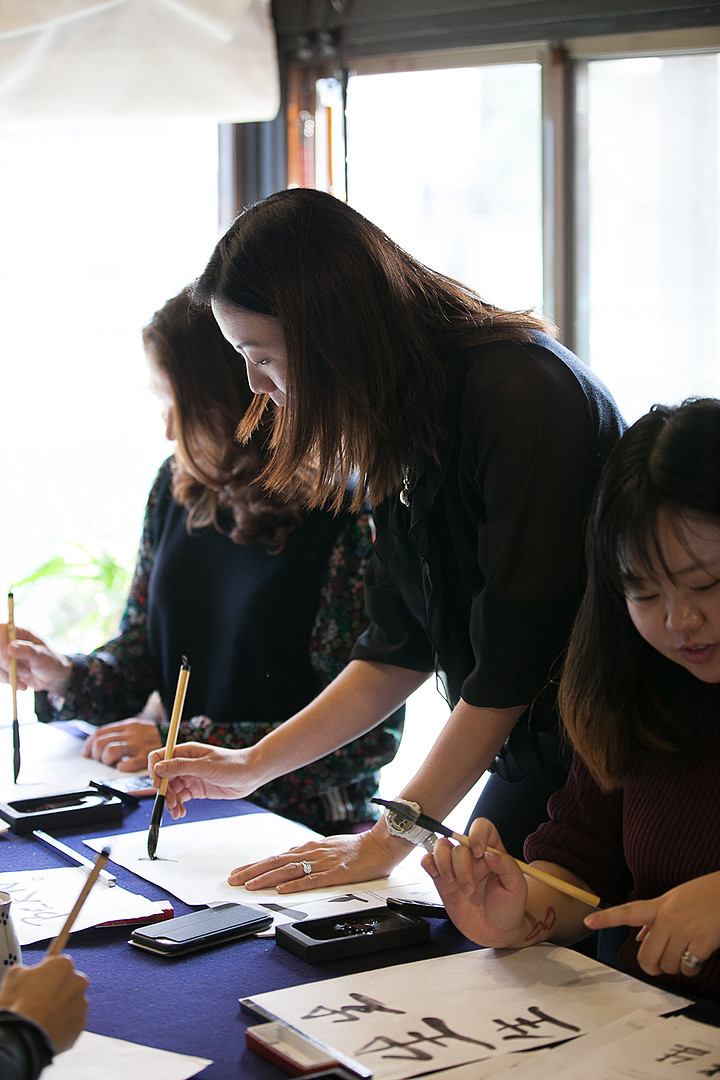
In parallel, I envision offering community workshops in “performing calligraphy”—inviting participants to explore their own connection to nature through brush, ink, and movement. These sessions will emphasize presence, mindfulness, and embodied expression: how the physical act of writing can bridge human emotion, memory, and the environment in ways that words alone cannot.
Through this dual program (installation + participatory workshop), I aim to foster deeper engagement between the community, the space, and the living energy of nature, renewing traditional calligraphy in a contemporary, experiential context.
During my residency on Nikoi Island, I explored the island and experimented with natural materials as tools and surfaces for calligraphy.
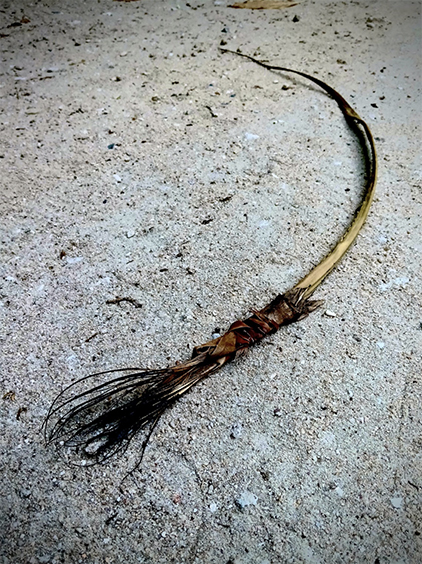
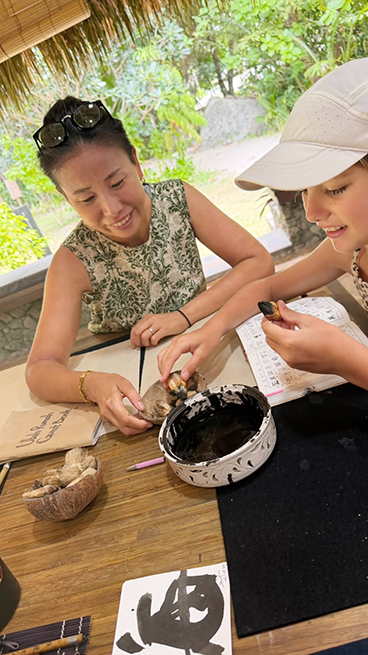
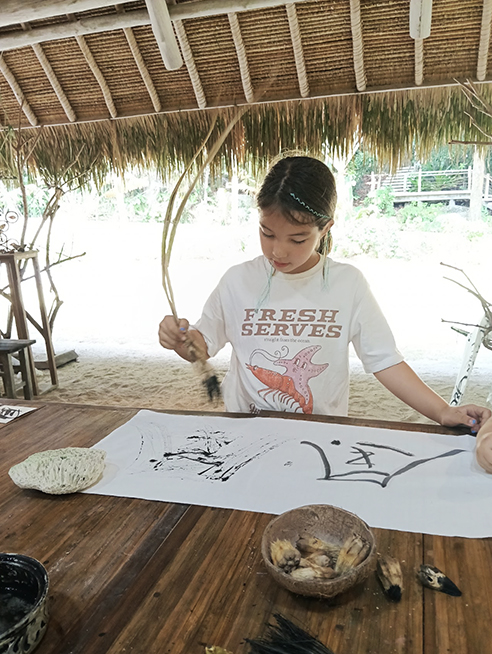
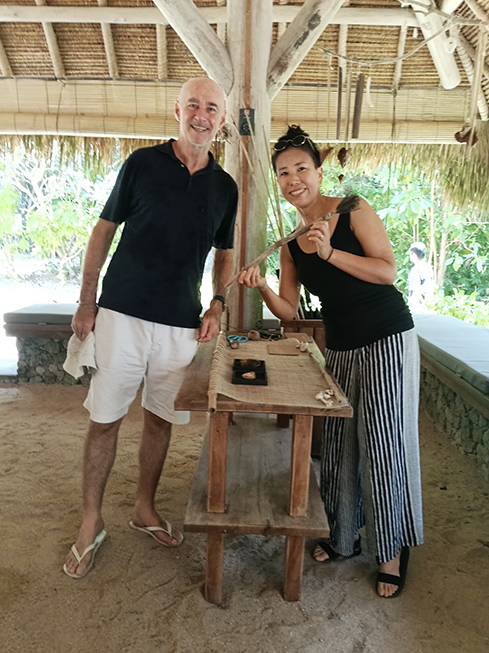
One of my main experiments was using dried pandan leaves as a brush. By removing the outer layer, I was able to expose the inner fibers and use them for writing. The movement of each individual fiber is difficult to control, but by connecting its movement with the movement of my arm, I discovered a unique way of creating lines. The unpredictable nature of the fibers produced expressions that went beyond my original intention.
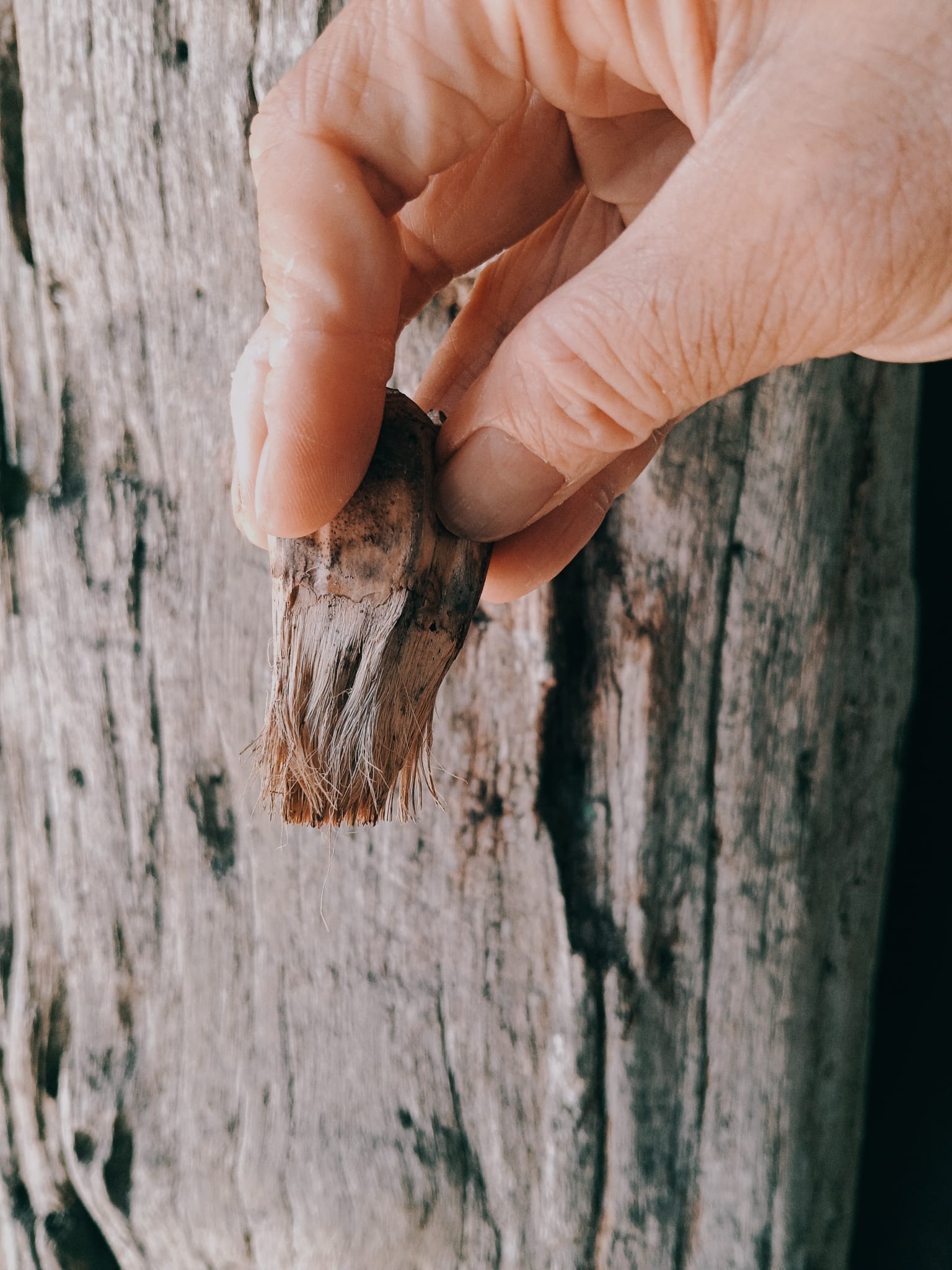
I experimented with bundles of rough coconut fibers as brushes. By changing the density of the fibers, I could create different qualities and movements within one work, producing dynamic expressions that would not be possible with a traditional calligraphy brush.
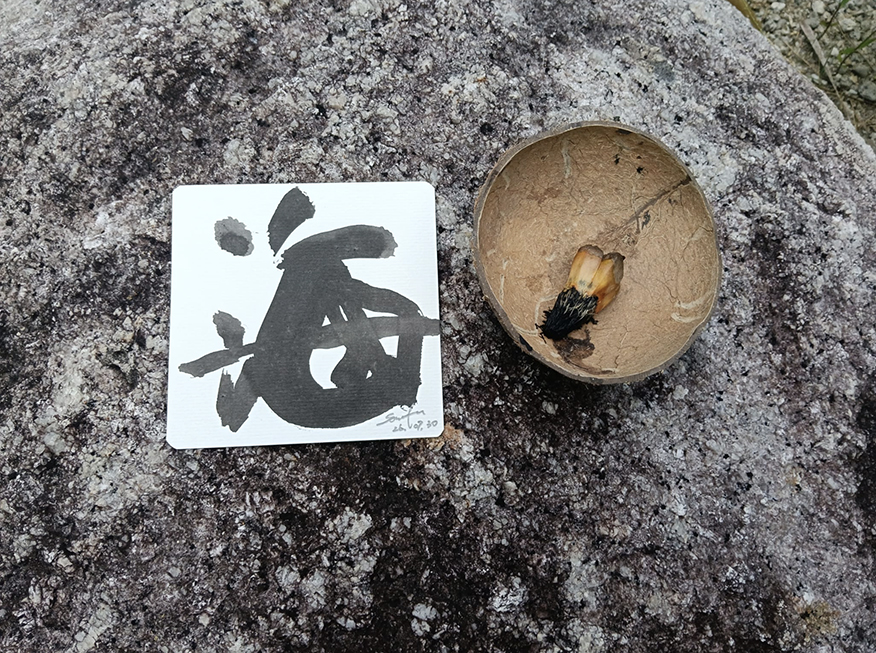
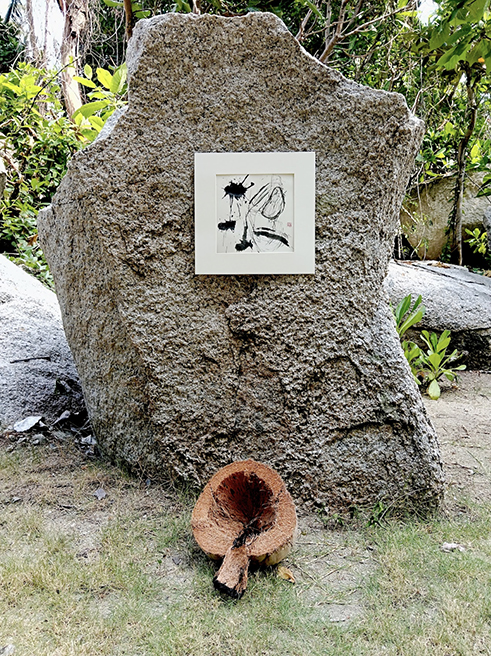
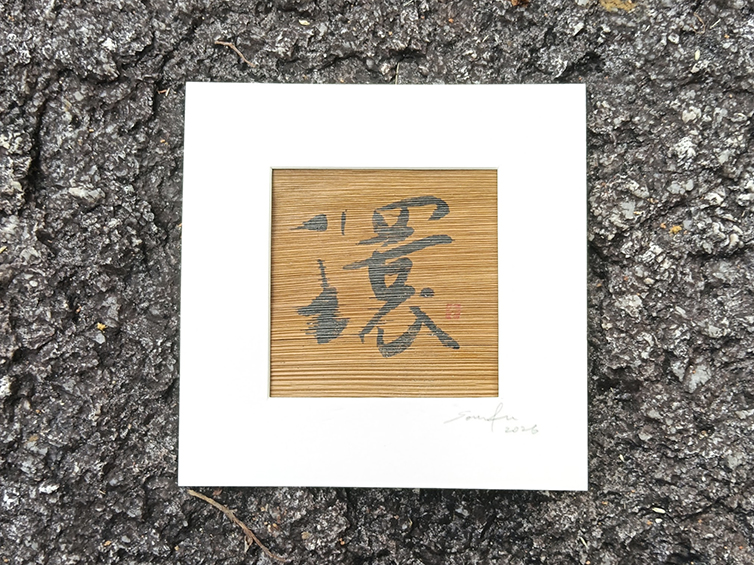
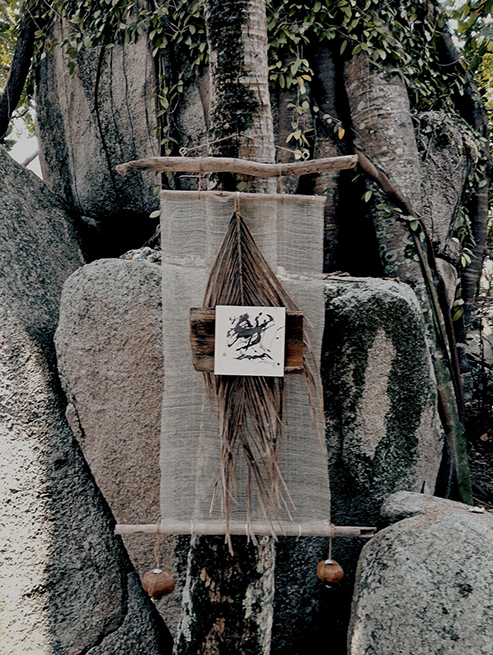
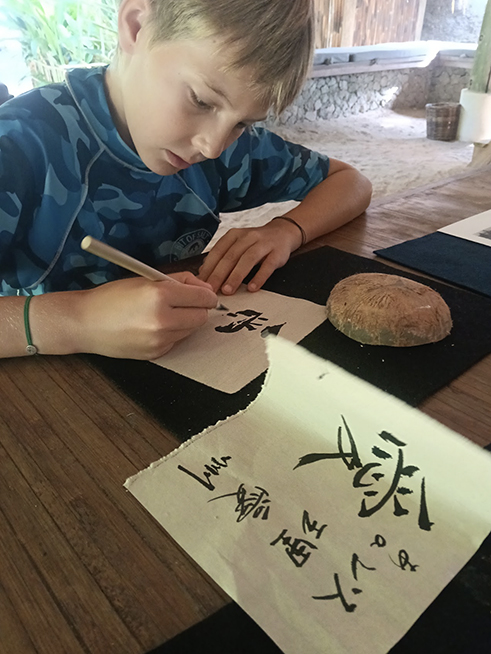
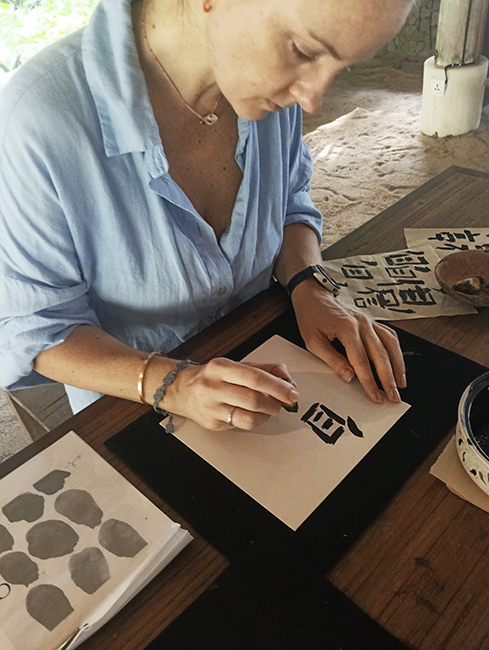
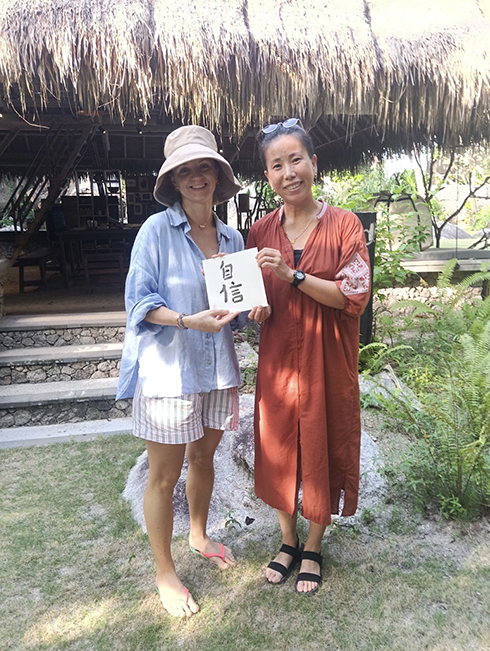
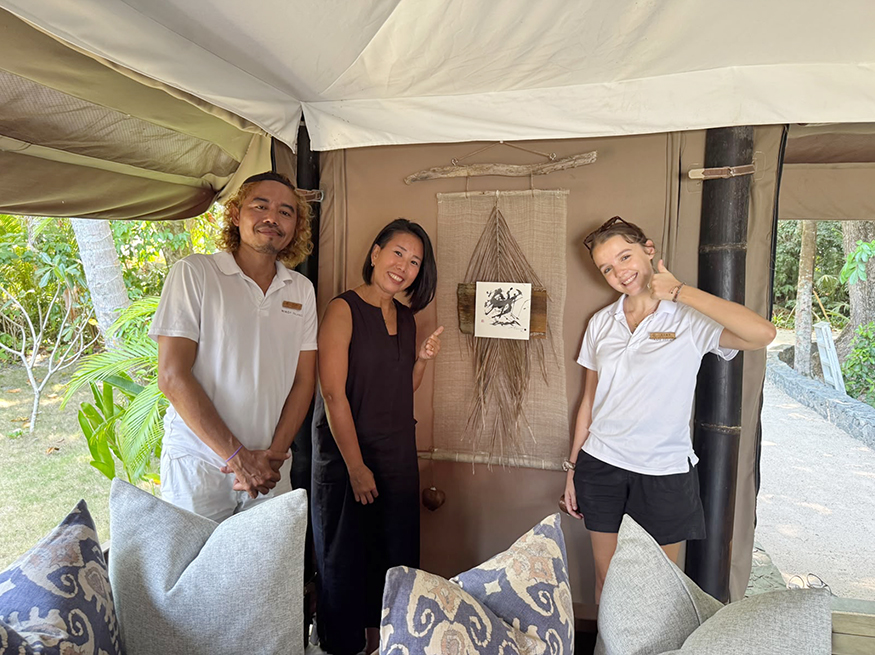
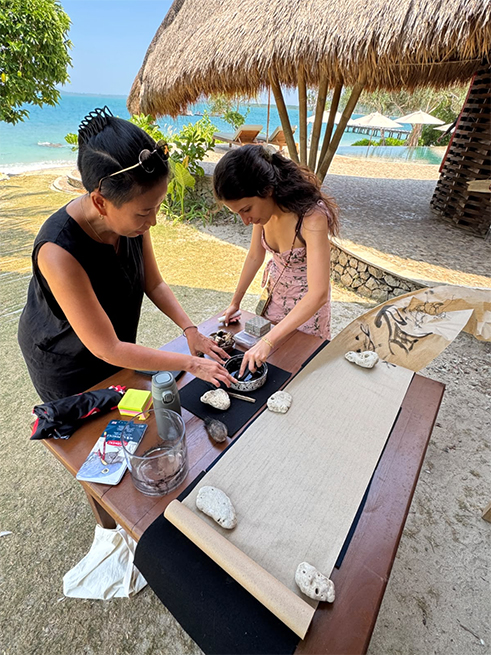
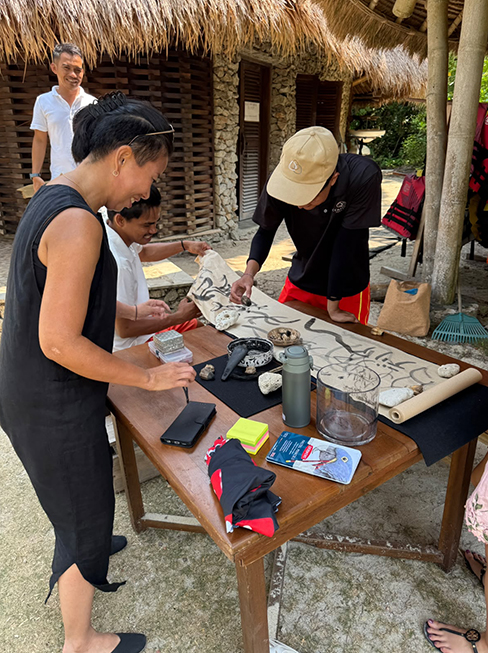
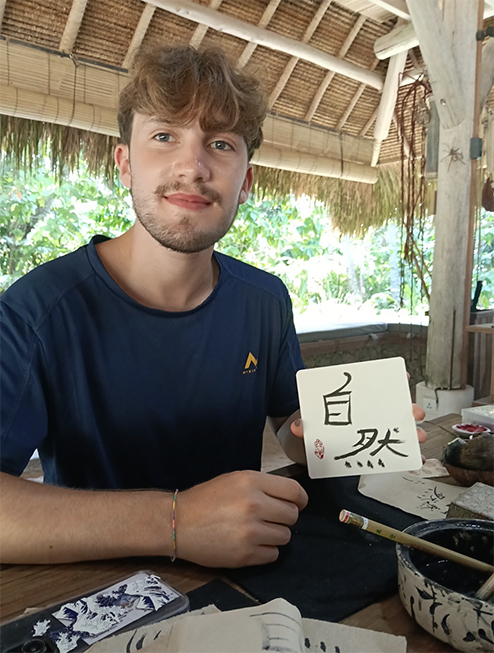
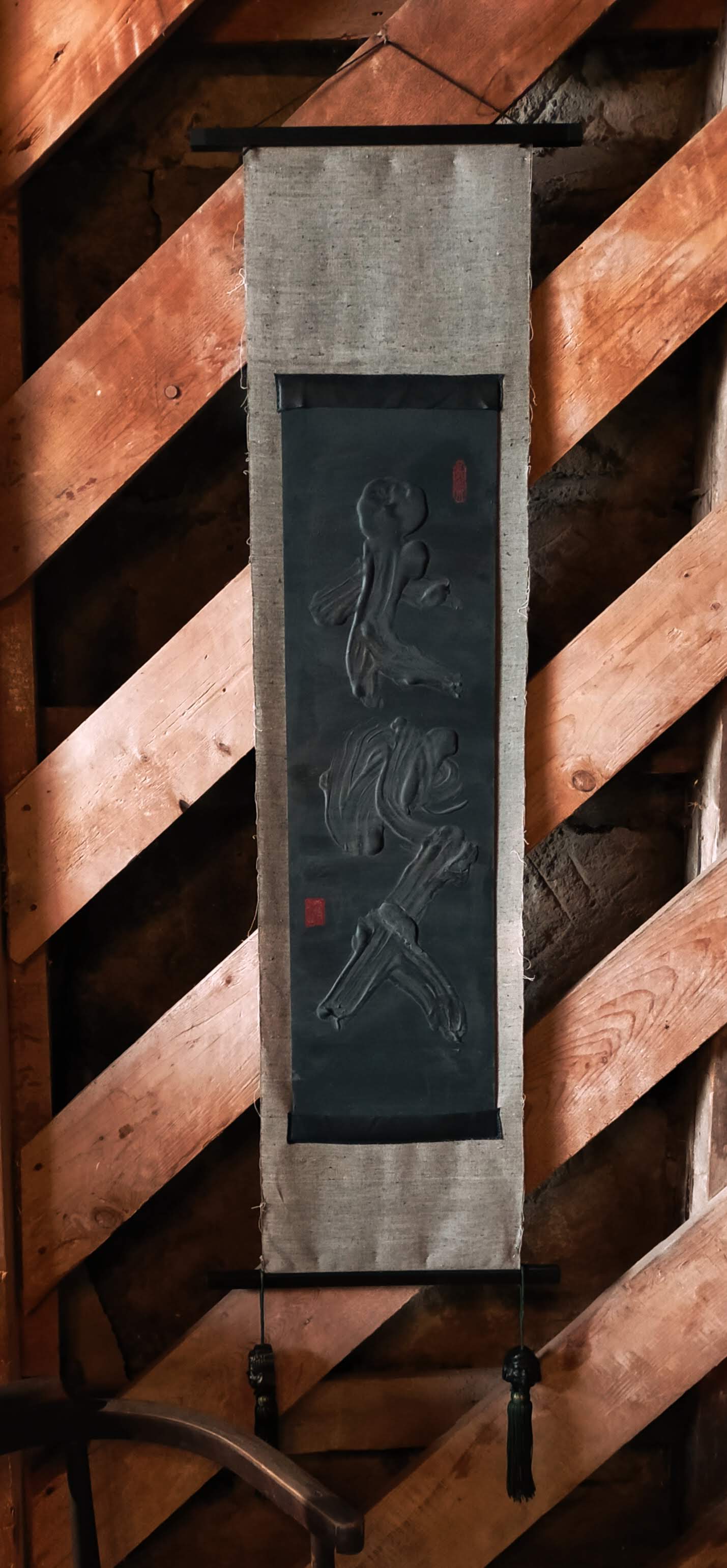
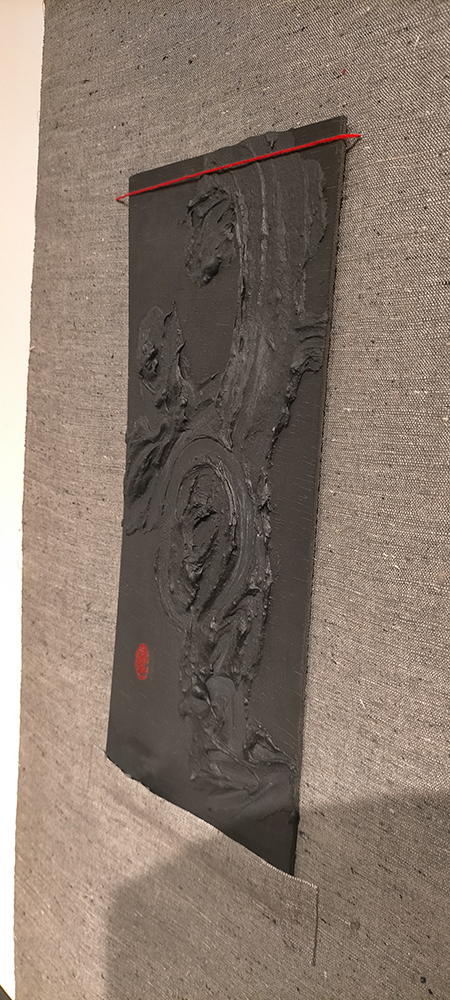
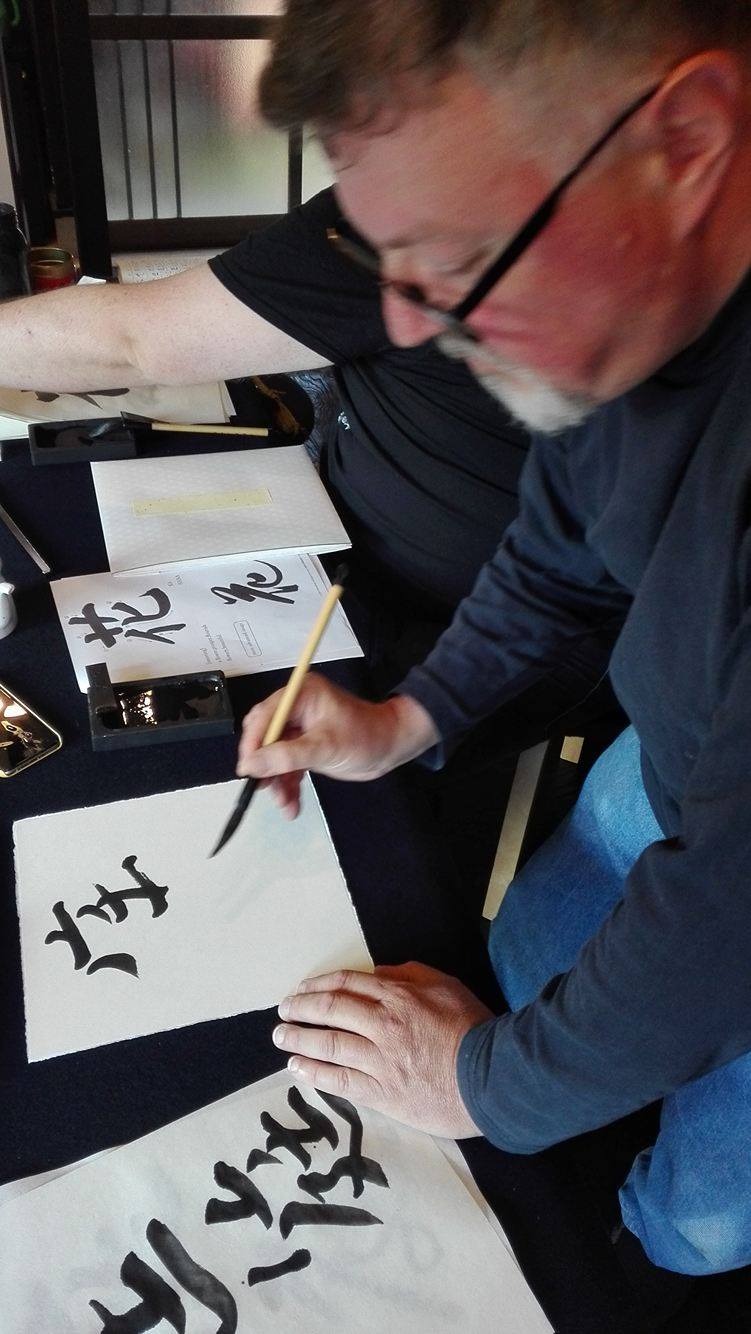
One of the works created during this process was displayed at the Nikoi Spa. The work, titled “然 (Zen) – Everything is as it should be,” was written using a pandan leaf brush. During my stay, I began to feel that everything on the island—including rocks, sand, trees, and the people who live and work there—exists in its own natural place and form. I came to feel that simply being as we are can itself be a source of beauty. I chose the character “然” to express and preserve this feeling.
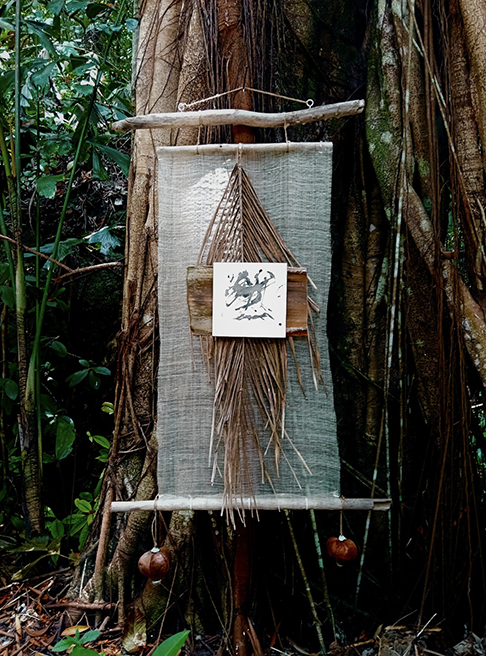
I also incorporated coconut leaves into the presentation of the work. This was inspired by a guest who visited my studio and suggested that the material would suit my work very well. Her suggestion opened up a new possibility for the presentation and became a valuable part of the creative process. Through these experiments, I discovered new possibilities for calligraphy by allowing natural materials, chance, and the surrounding environment to become part of the creative process.
Through this project, I came to recognize the beauty of things simply being as they are. This realization led me to think about removing the usual tools of calligraphy and exploring whether I could create a work using only the movement of my own hand.
I have experimented with creating calligraphy directly with my hands rather than using a brush for several years. However, my experience on Nikoi Island gave me a new reason to return to this approach. By working closely with natural materials and observing their inherent strength and beauty, I began to see my own hand in a different way.
I had never thought of my hands as particularly beautiful. They are dark, rough, and shaped by everyday work. Yet I realized that my hands can sense subtle changes, receive a wide range of information, and transform those sensations into movement and creation. I wanted to express the strength and beauty that exists in the hand itself.
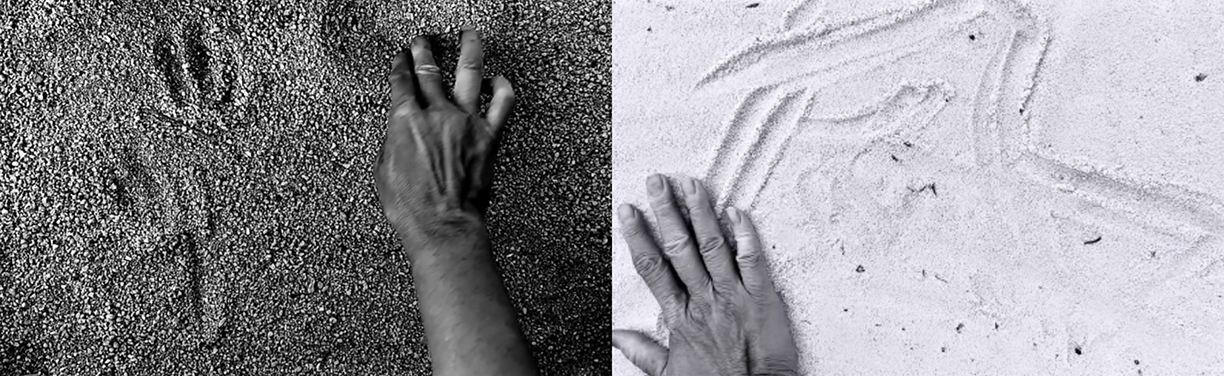
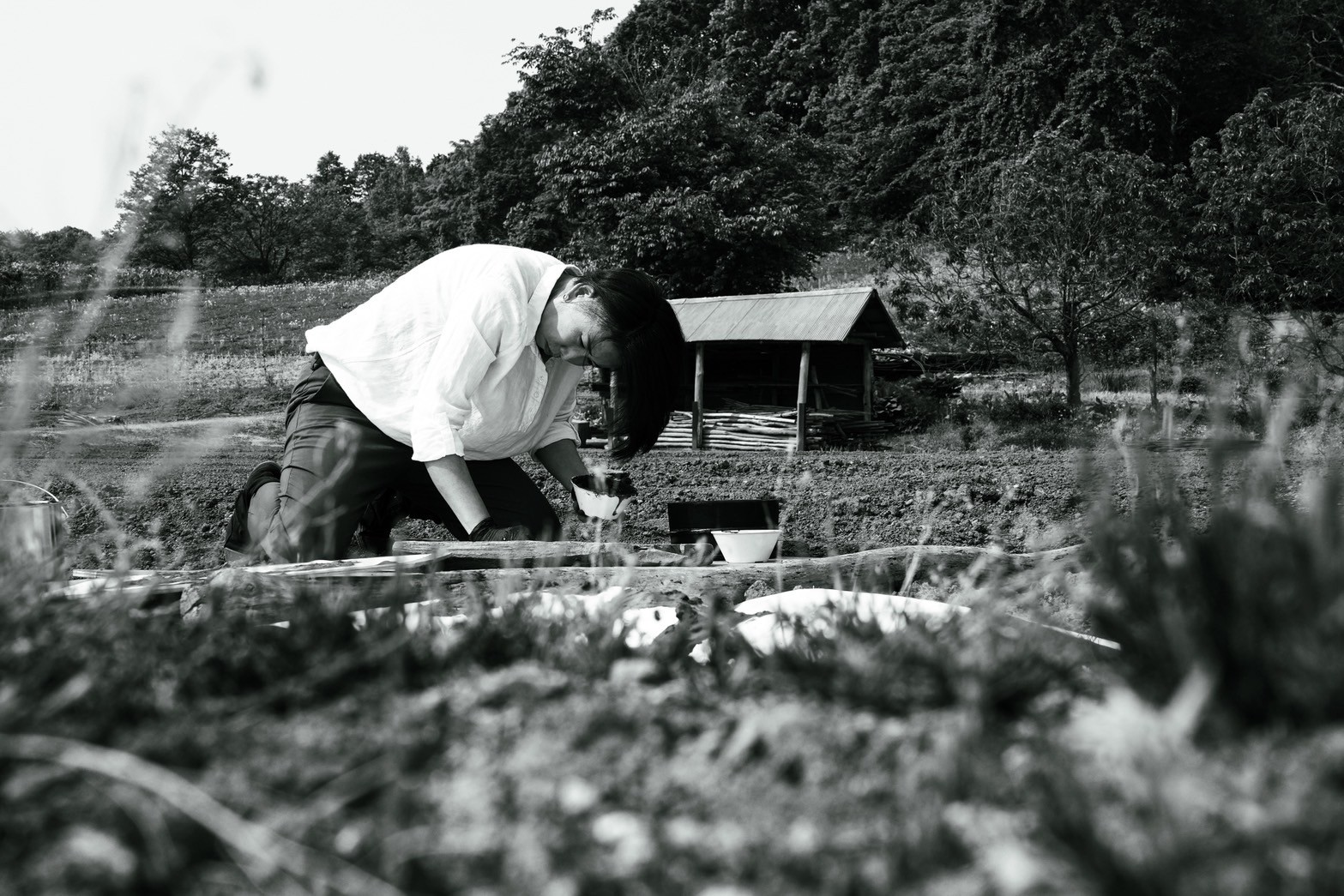
I therefore created calligraphy directly on sandy ground using only my hand, and recorded the process on video. The texture and grain of the sand required me to constantly adjust the speed, angle, and movement of my hand, much like adjusting the pressure and movement of a brush according to the paper and ink in traditional calligraphy.
At the same time, this process felt much more simple and instinctive—almost like a child playing in a sandbox. I had to respond immediately to the texture and sensations transmitted through my hand. This created a new and unexpected sense of freedom and joy in my creative process.
Through this project, I discovered a new form of calligraphy in which the hand itself becomes both the tool and the subject of expression.
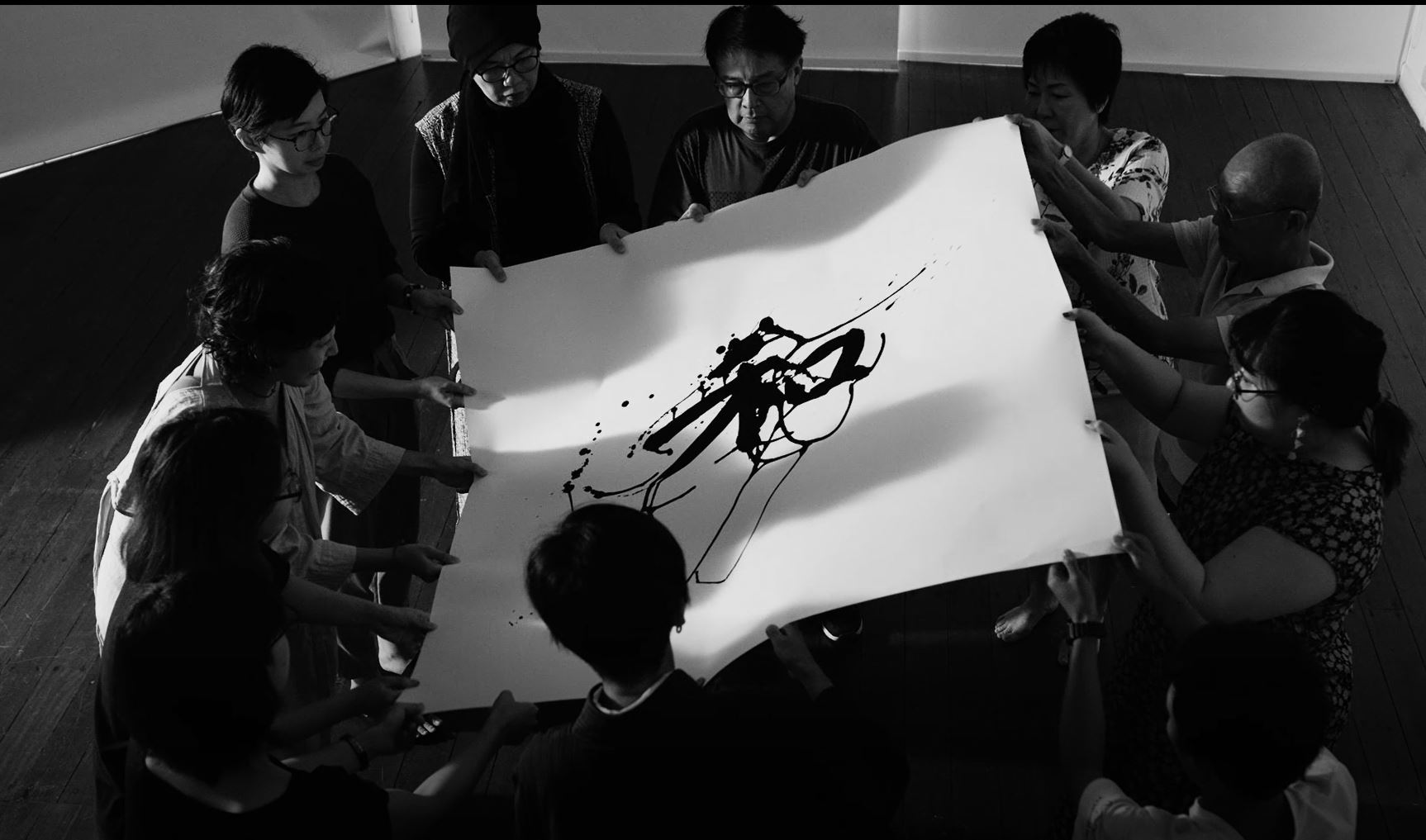
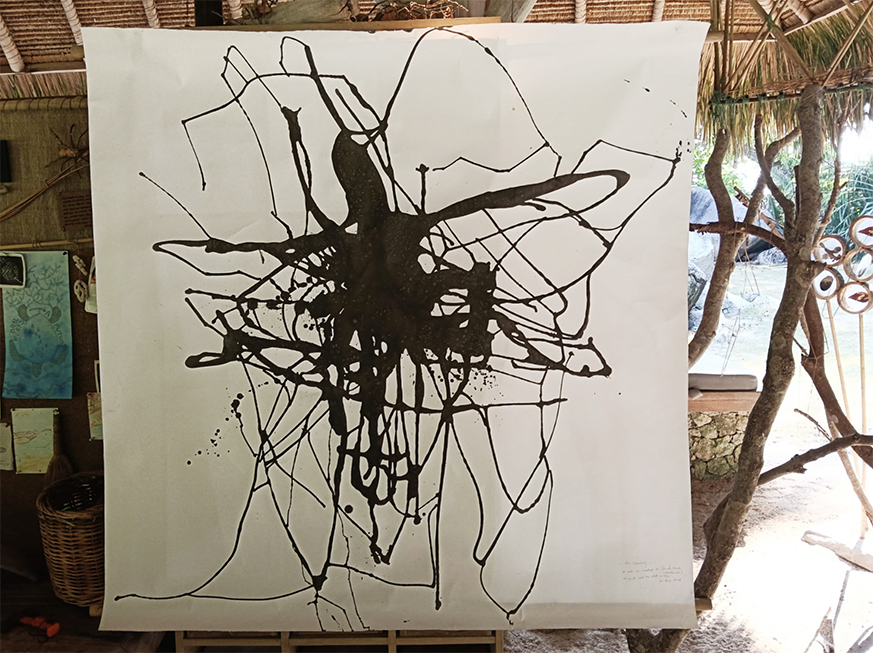
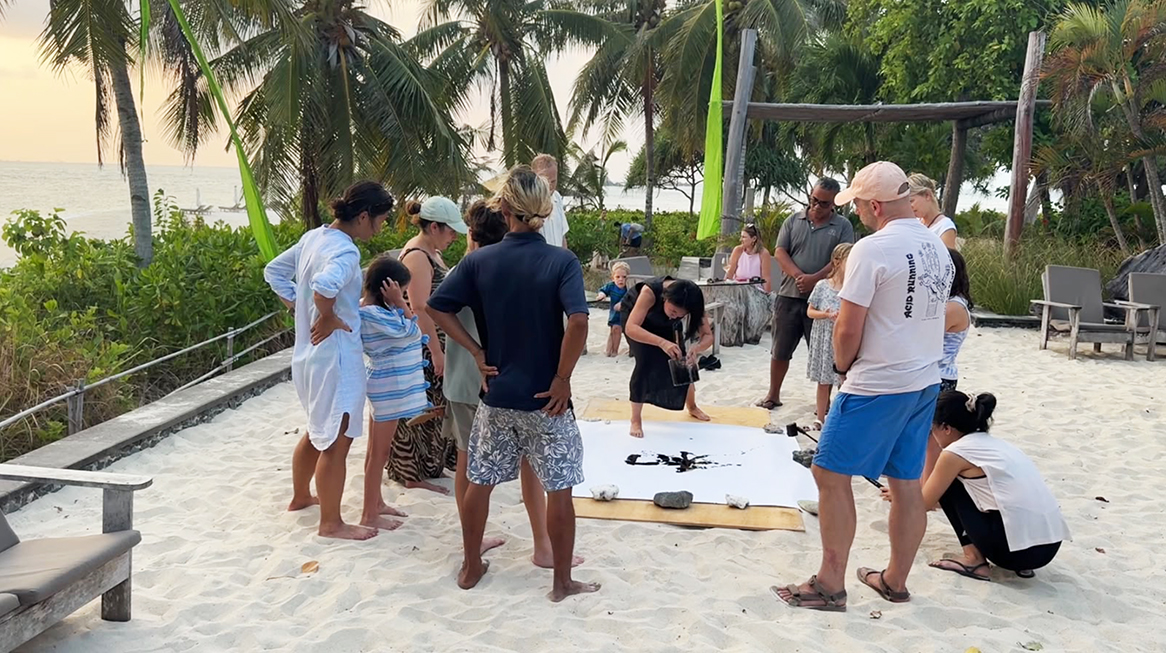
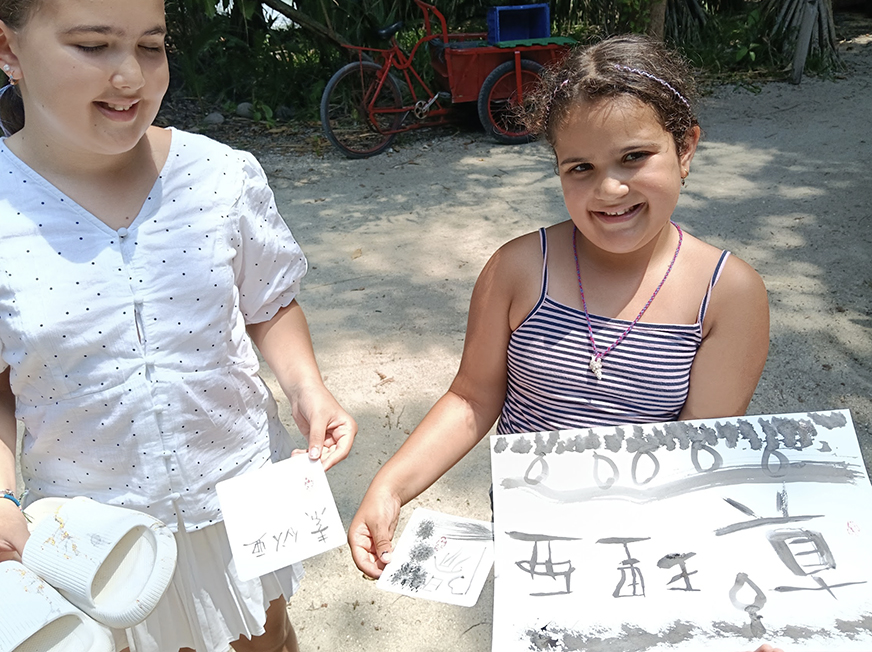
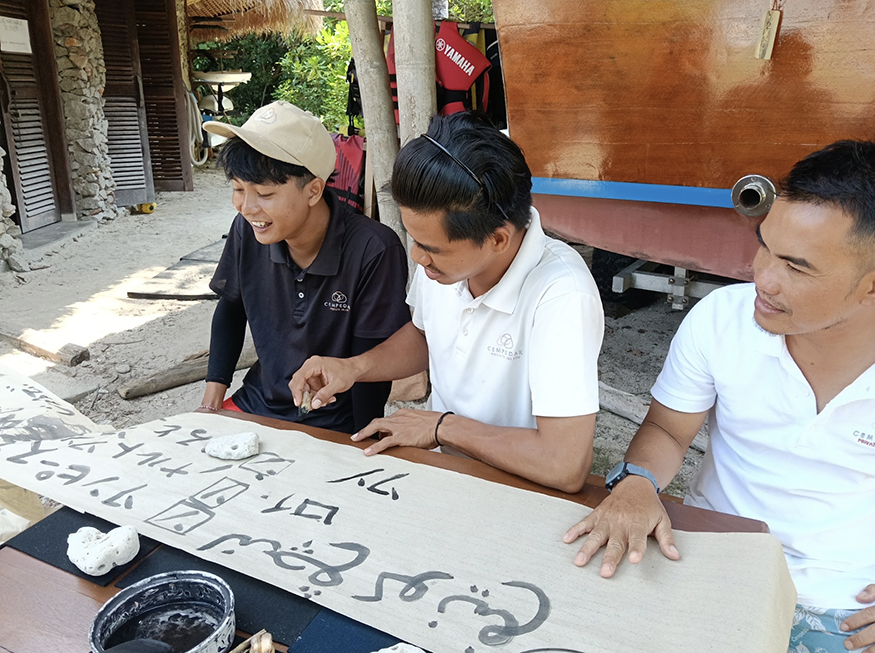
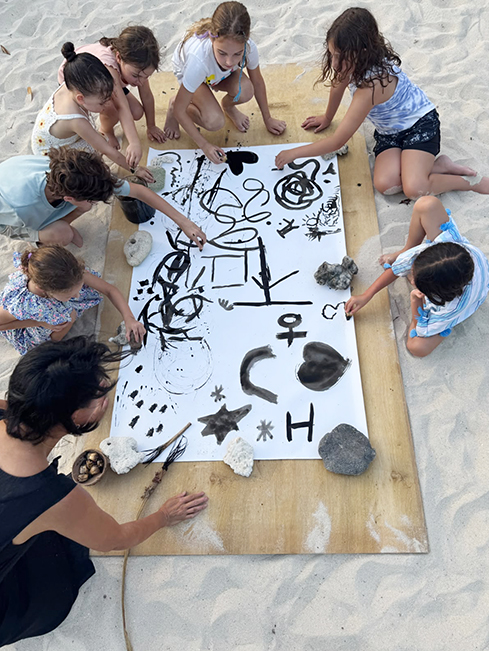
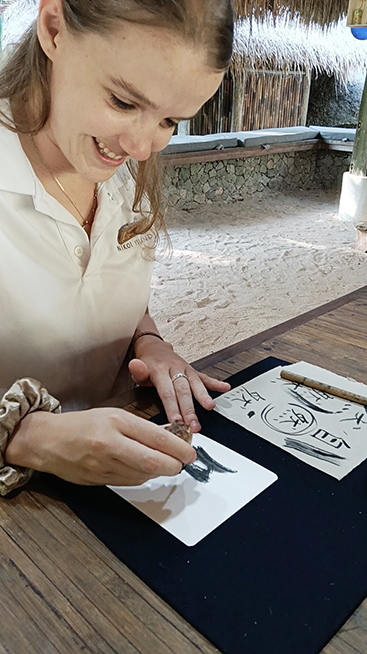
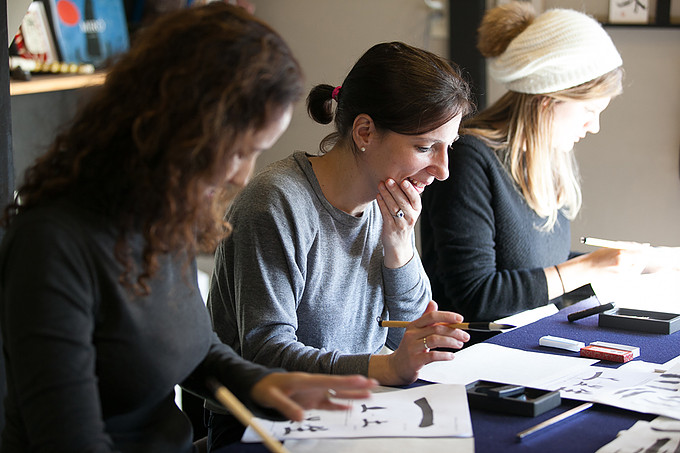
Another collaborative artwork I created together with the guests and the staff, was “Harmony.” I first found this way of making art when I was working in Johor Bahru, Malaysia.
The idea behind this work is a simple question: When we meet something different from ourselves, how can we create harmony?
Everyone has different ideas, feelings, and experiences. So, I don’t think harmony means that everyone has to make the same thing.
For me, harmony means keeping our differences, but still finding a way to create something together. I wanted to see how different things could come together, overlap, and create something new. That is why I made this work together with the guests and staff.
It was especially meaningful to create “Harmony” here at Nikoi, a place where people from different backgrounds come together, and where people and nature live together. The process of making this work together was just as important as the final artwork.
Ubah Rumah is an art residency and archive inspired by stories of our region.


