


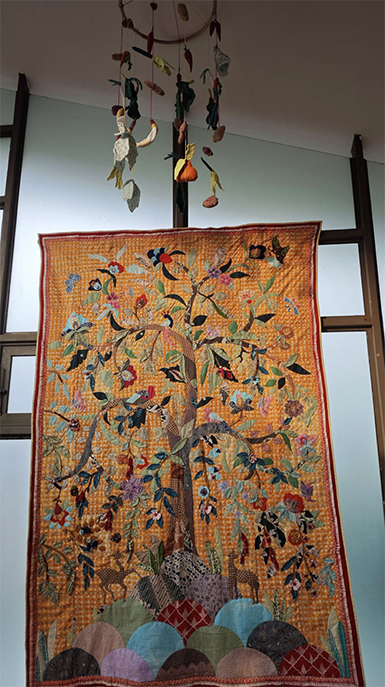
Lusiana Limono is an artist and textile crafter with a strong interest in environmental issues and handmade traditions. She aims to use craft as a language of expression in her works and knowledge production processes. Being an MA graduate from IKJ Postgraduates, she is interested in the role that cloth and domestic objects play in creating opportunities for a deeper connection between people and their sense of (place, wellbeing, identity, roots). She looks to the tradition of both textile crafting and the wearable goods to create (assemblage, installation, and objects), exploring intersections of labor, mindfulness, and culture.
She is currently a creative director at KAIT Handmade Studio, an explorative textile studio. She is the co-founder of MaPaQuilts and Kriya Kontemporer Indonesia. MaPaQuilts is a Malang-based community that gathers women quilters. Kriya Kontemporer Indonesia is a craft forum for craft scholars, practitioners, and professionals. Lusiana is closely affiliated with peretas.id and Sekolah Pemikiran Perempuan. Both are independent initiatives for women art workers in Indonesia and beyond.
She has been awarded the Good Design Indonesia-Best (2017), the Good Design Award in Japan (2018), the ASEAN Foundation Weaving Tales Award (2021), and a dance film, Kait (2022), was nominated for the IMAJITARI 2023 official selection. Her recent solo exhibition, Berbicara Melalui Kain (2023), was presented by Goethe-Institut Indonesien at Goethehaus Foyer Jakarta.
These past two years, I have been busy with domestic waste experiments. From paper and soap to clay making and fabric scrap upcycling. During my 2025 art residency, I was truly impressed by Nikoi's waste processing. They utilise organic waste for compost and cultivate black soldier larvae, which are then used as animal feed. In light of this circularity, I'm interested in engaging in creative upcycling of other, less-developed waste. This aligns with my concern for the domestic space as a space for knowledge reproduction and harmony with nature.
As this will be my second time visiting Nikoi, I want to focus on upcycling domestic waste into something functional, creative, and aesthetically pleasing. This way, the waste will circulate and be reused on the island without being shipped off-island. After receiving information from the waste management team on Nikoi, I discovered several materials that still needed a creative touch, including eggshells, used cooking oil, fabrics (towels, curtains, bed sheets), wine bottles, cardboard, and paper.
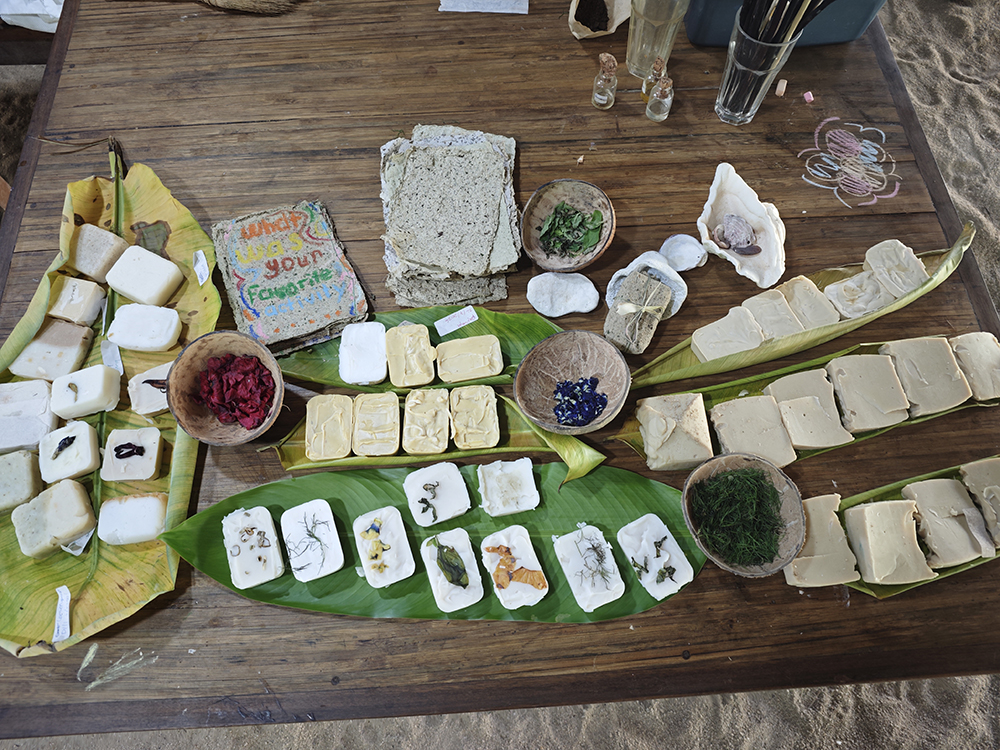
I sought the opinions of several staff members and, after receiving feedback, aligned the available materials with the island's needs. This project will focus on using used cooking oil as a raw material for dishwashing soap, laundry soap, and mop soap. Paper waste will be recycled into soap, wrapping paper, or handmade greeting cards. This project will involve waste management staff. With the kids club staff, if time permits, projects can be conducted on paper clay and bio-ceramics to be transferred into future children's creative activities.
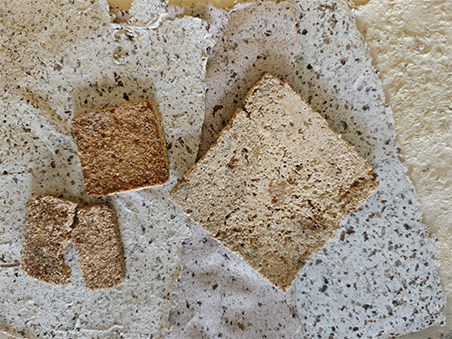
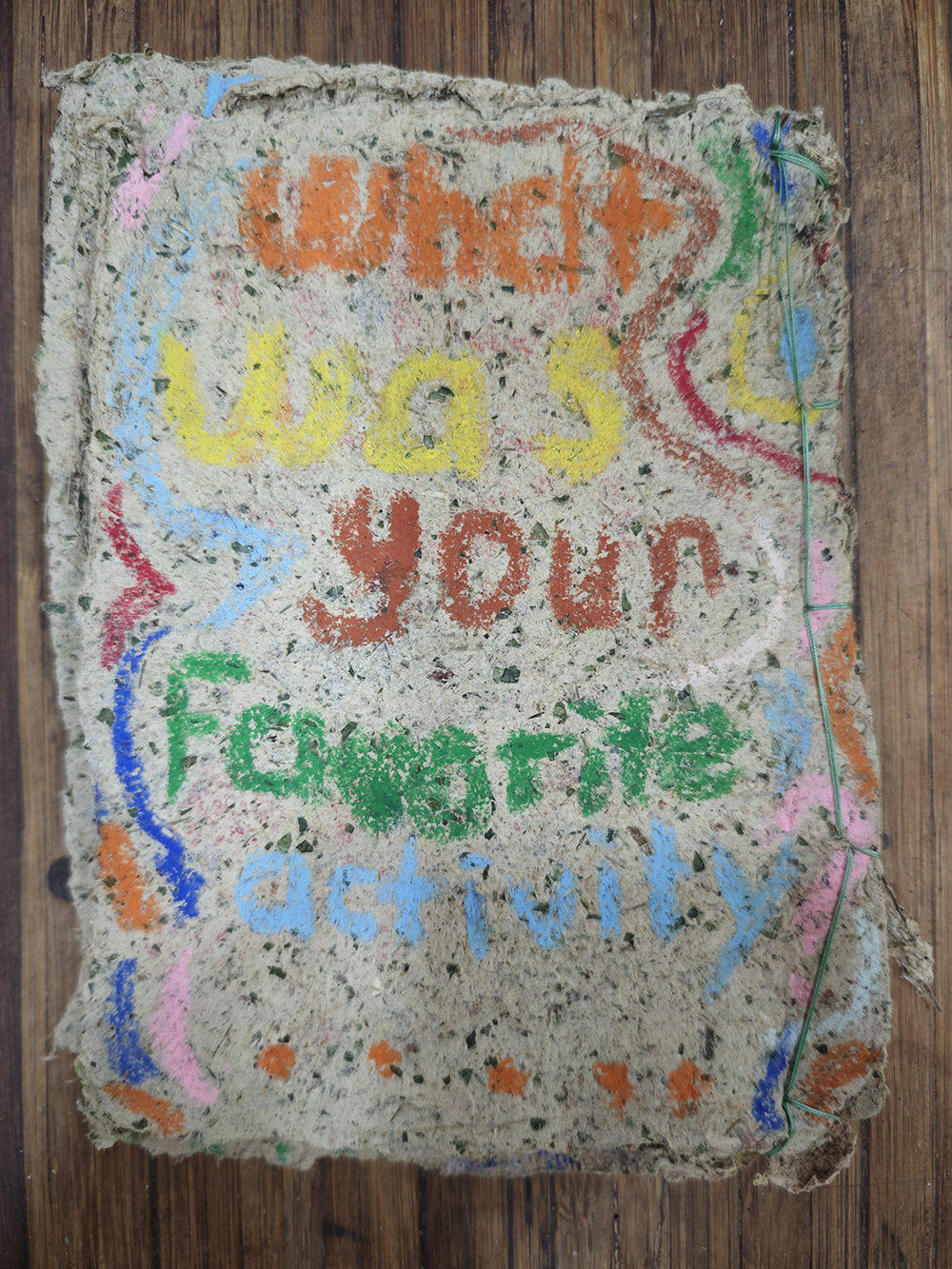
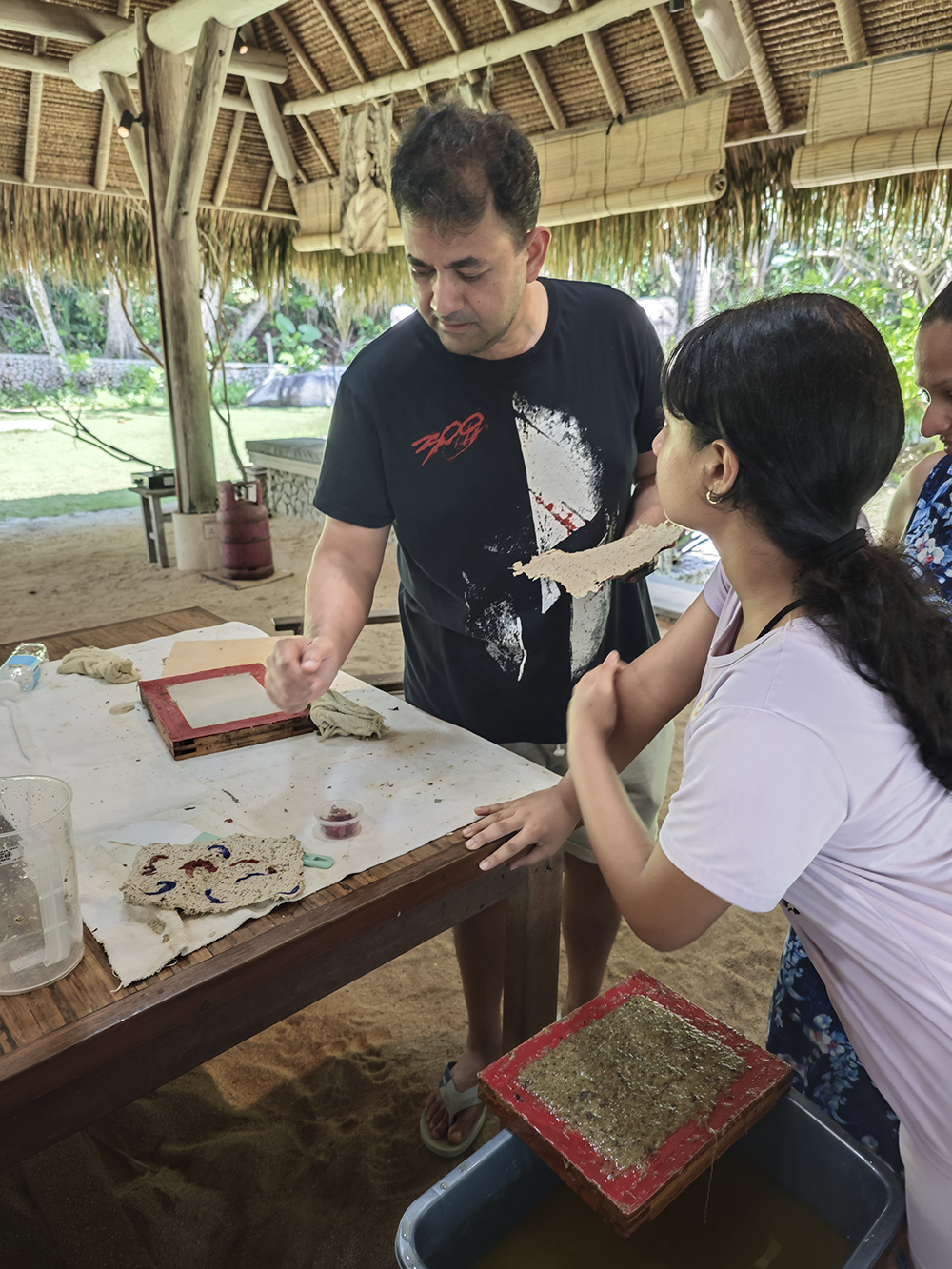
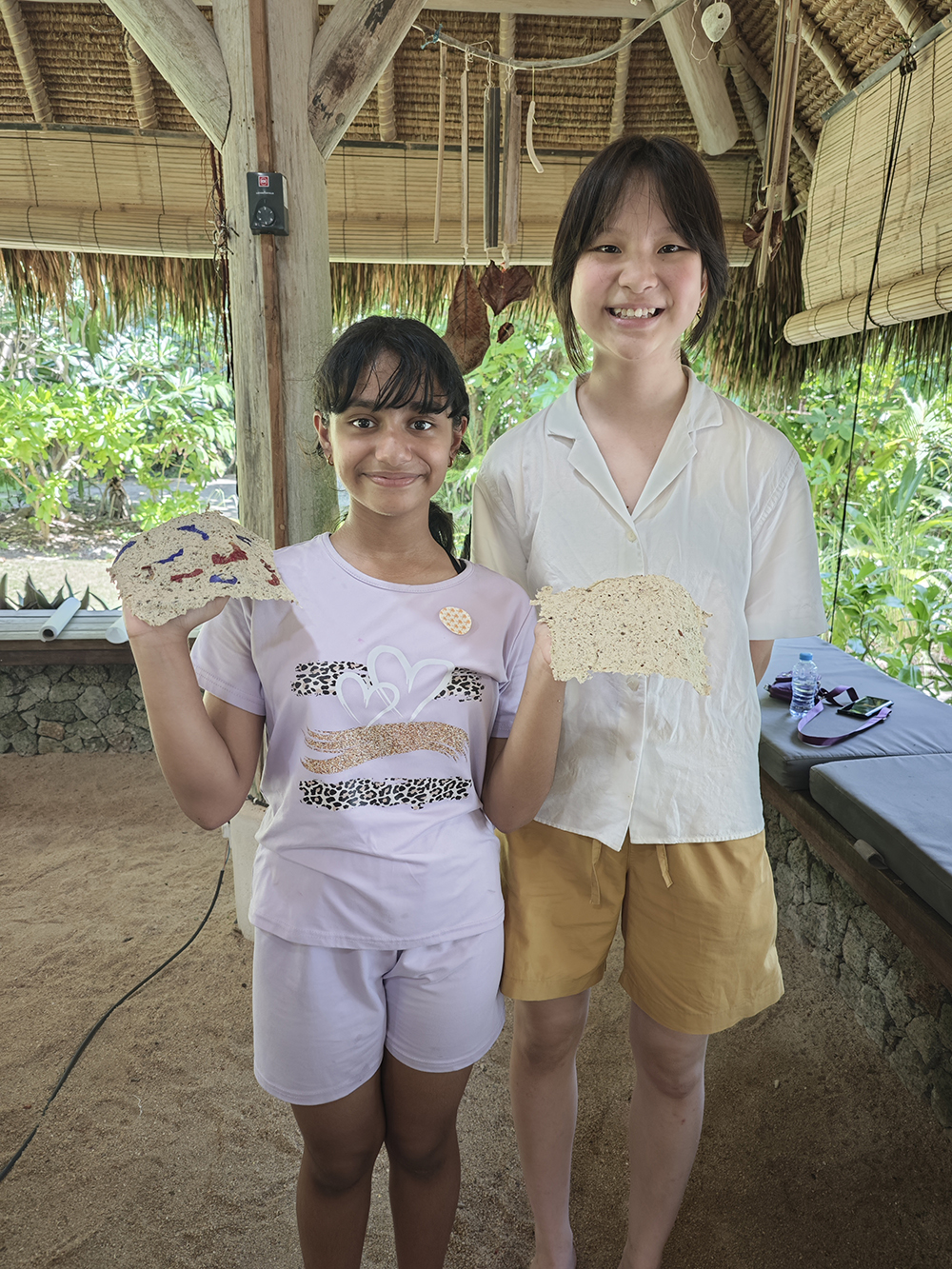
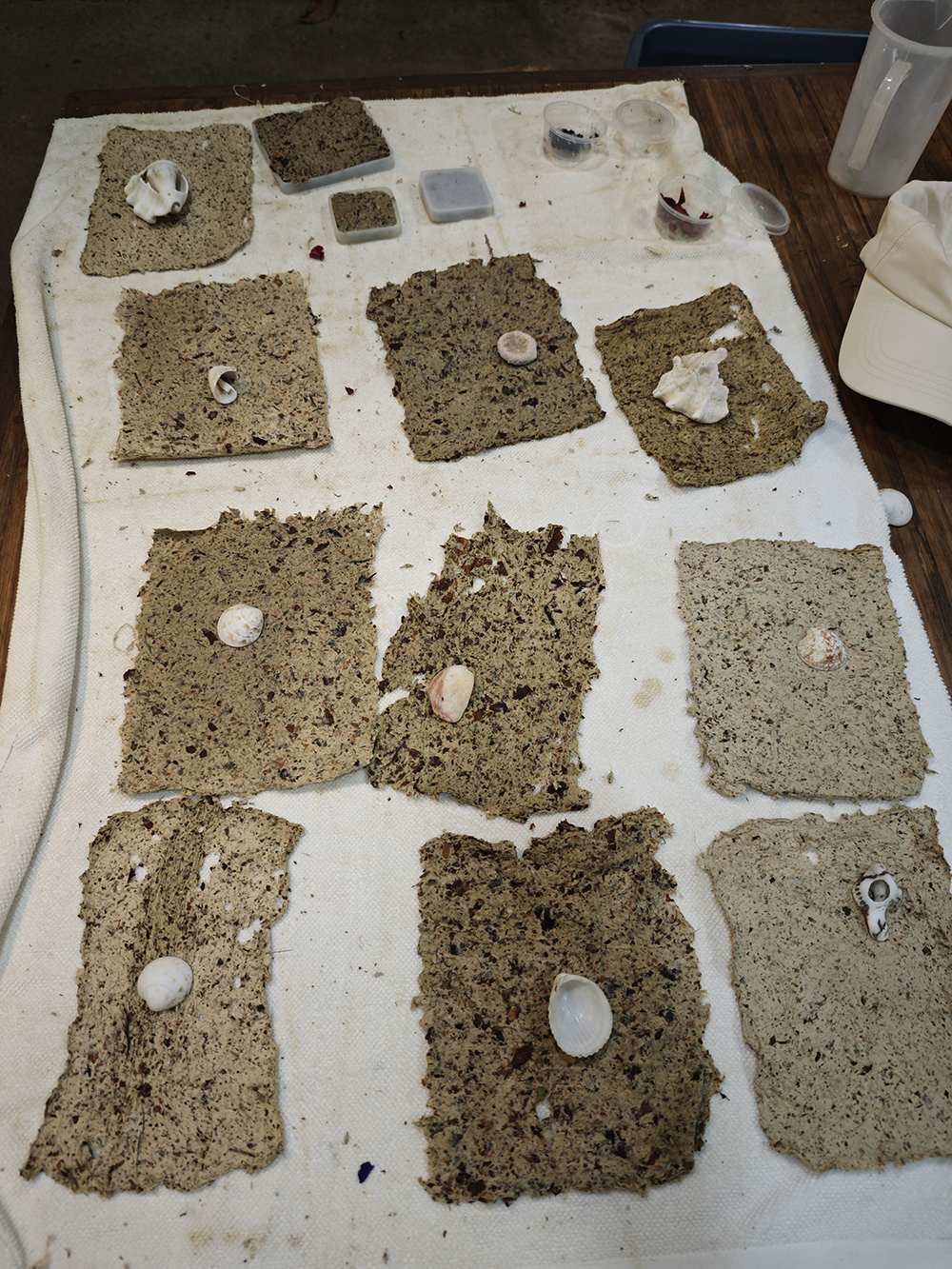
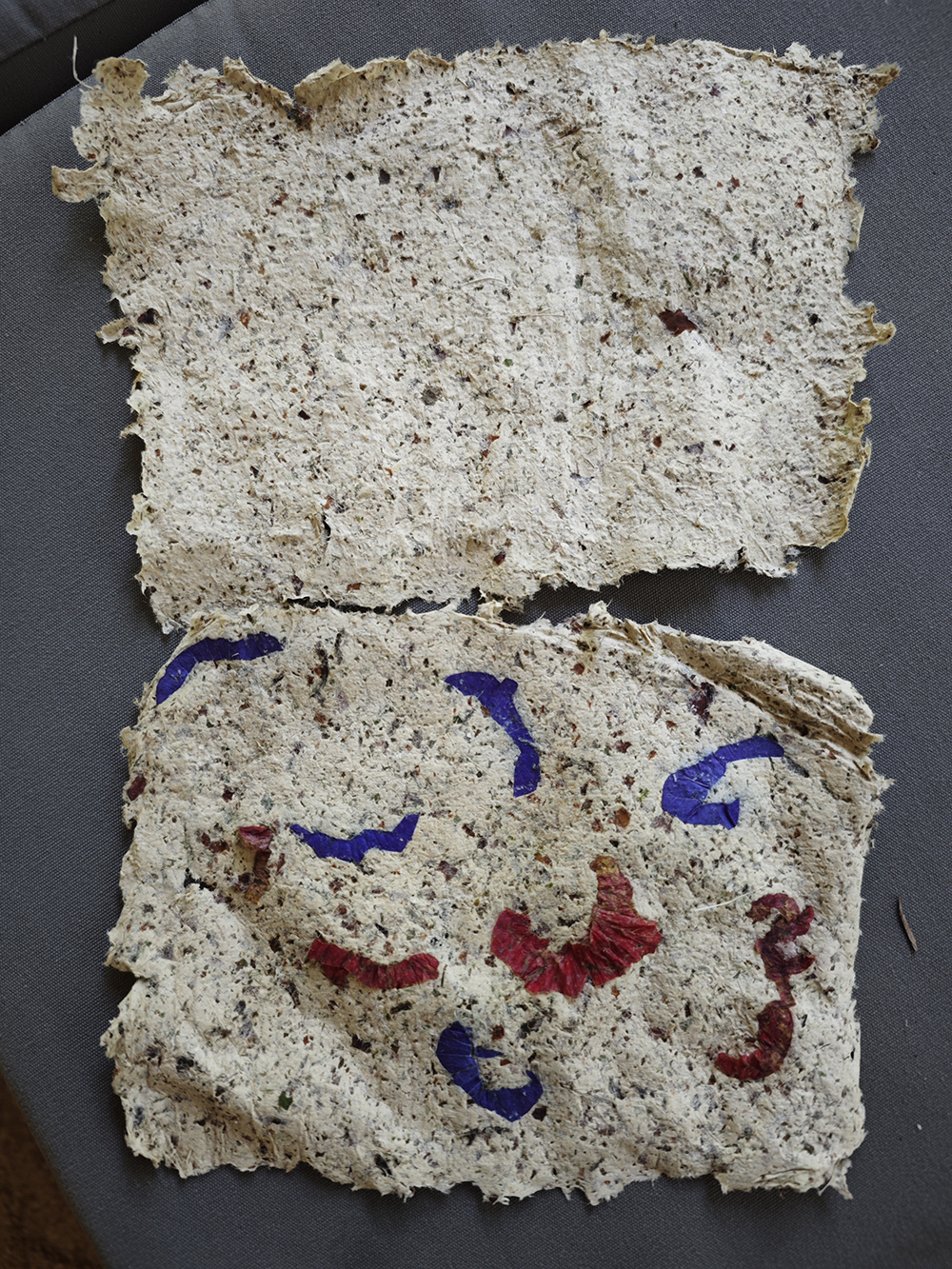
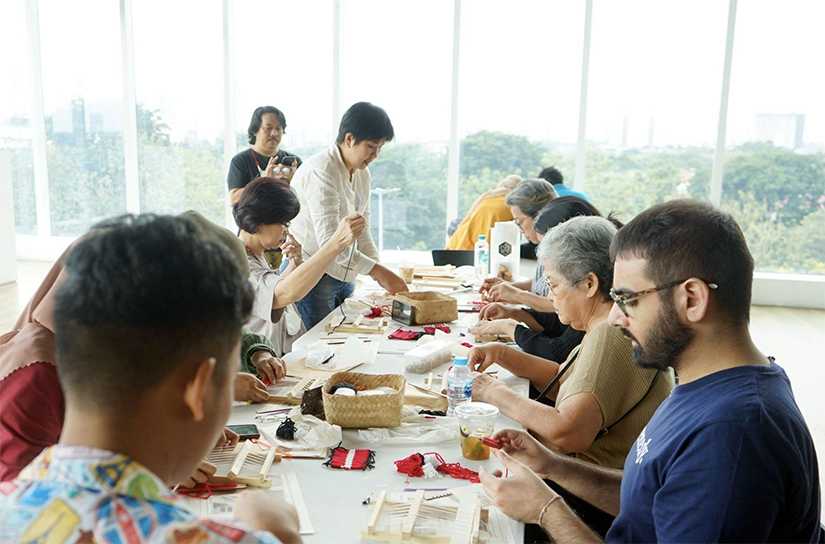
During this research residency, I focused on upcycling less-processed waste to reduce the logistical burden on staff, especially within the sustainability and waste management division. The Ubah Rumah studio is open to staff, and some guests have also shown interest in participating in the process. My daughter, Pandora, helped significantly with the paper-making activities involving children’s guests and the landscape staff. A mixture of dead algae, seaweed, and wood powder from the carpentry division became an interesting experimental material. The result was a wide variety of papers with different levels of flexibility and hardness.
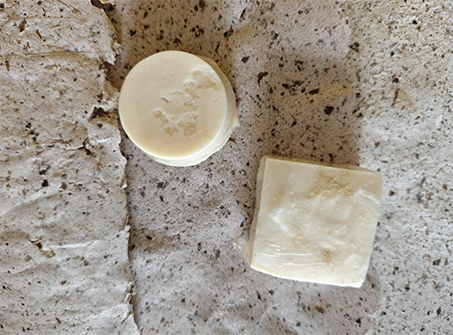
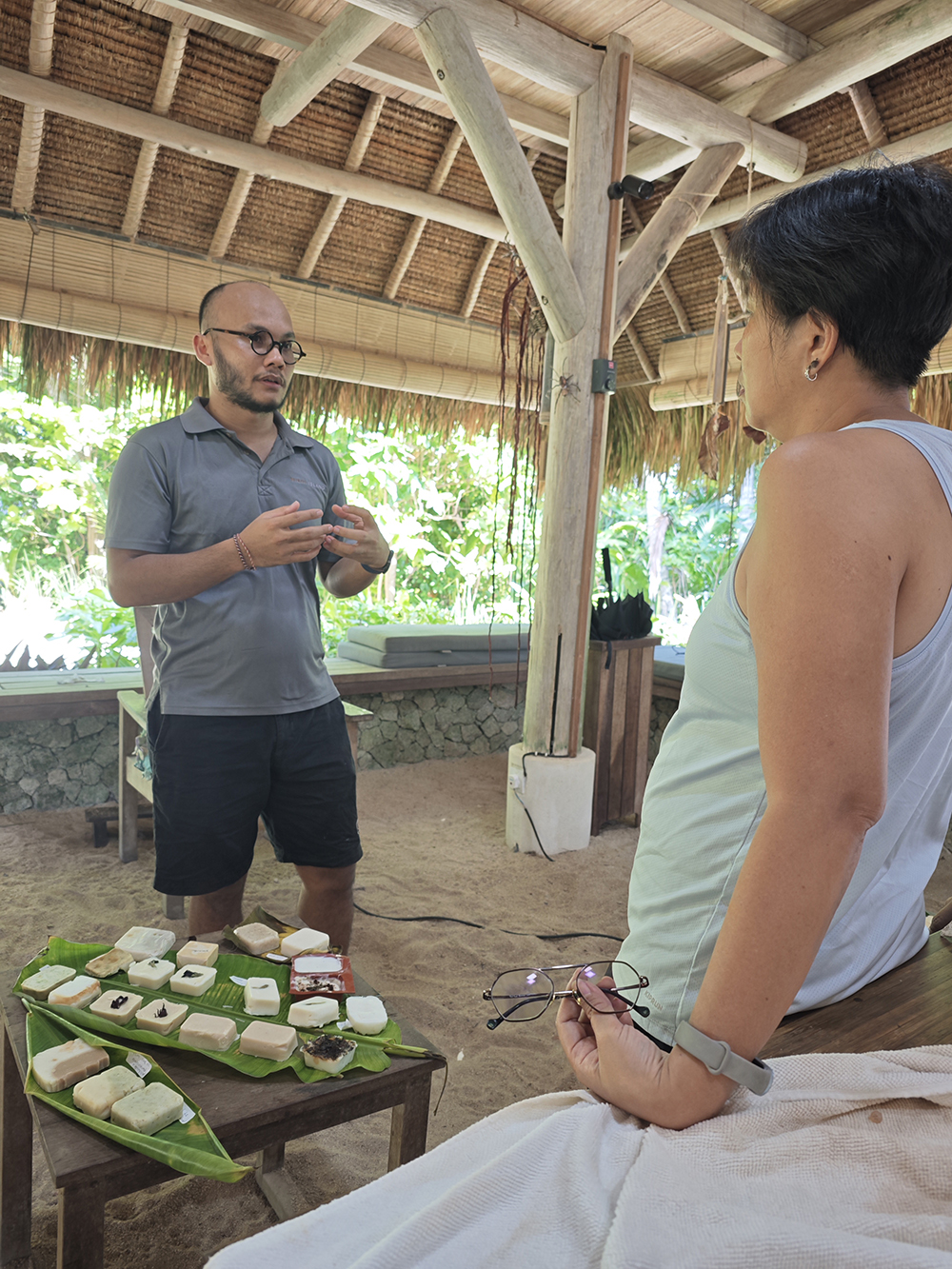
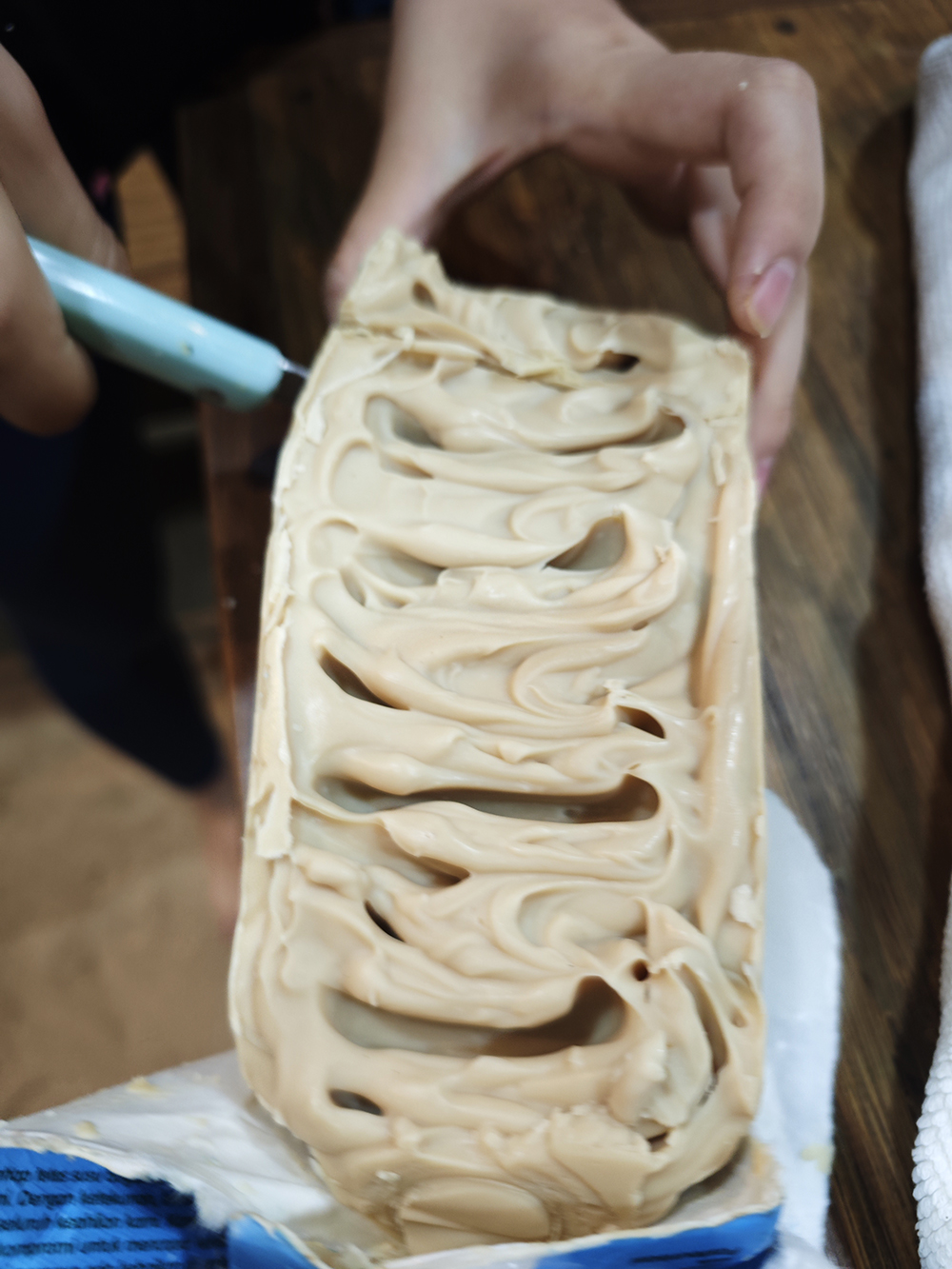
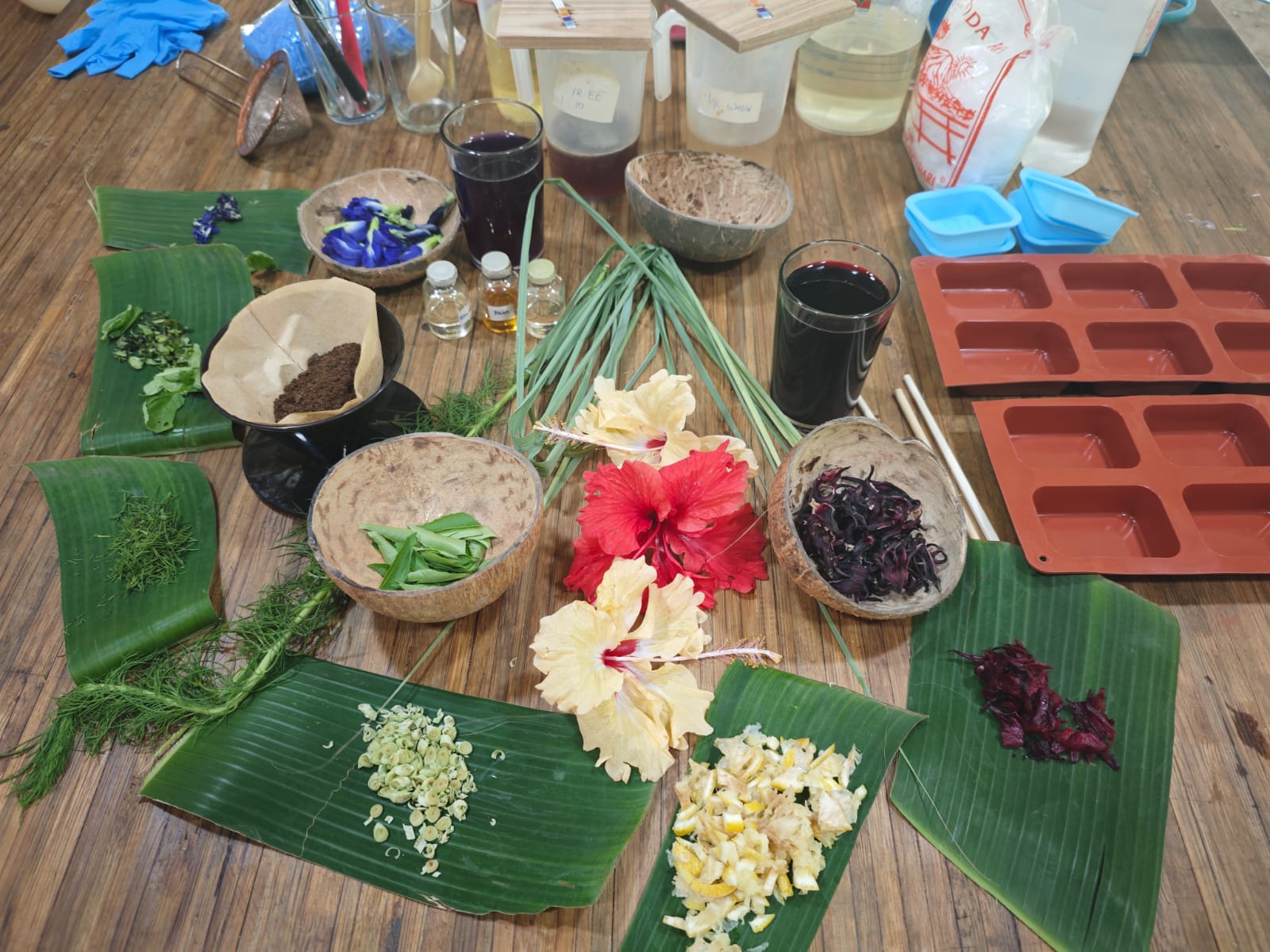
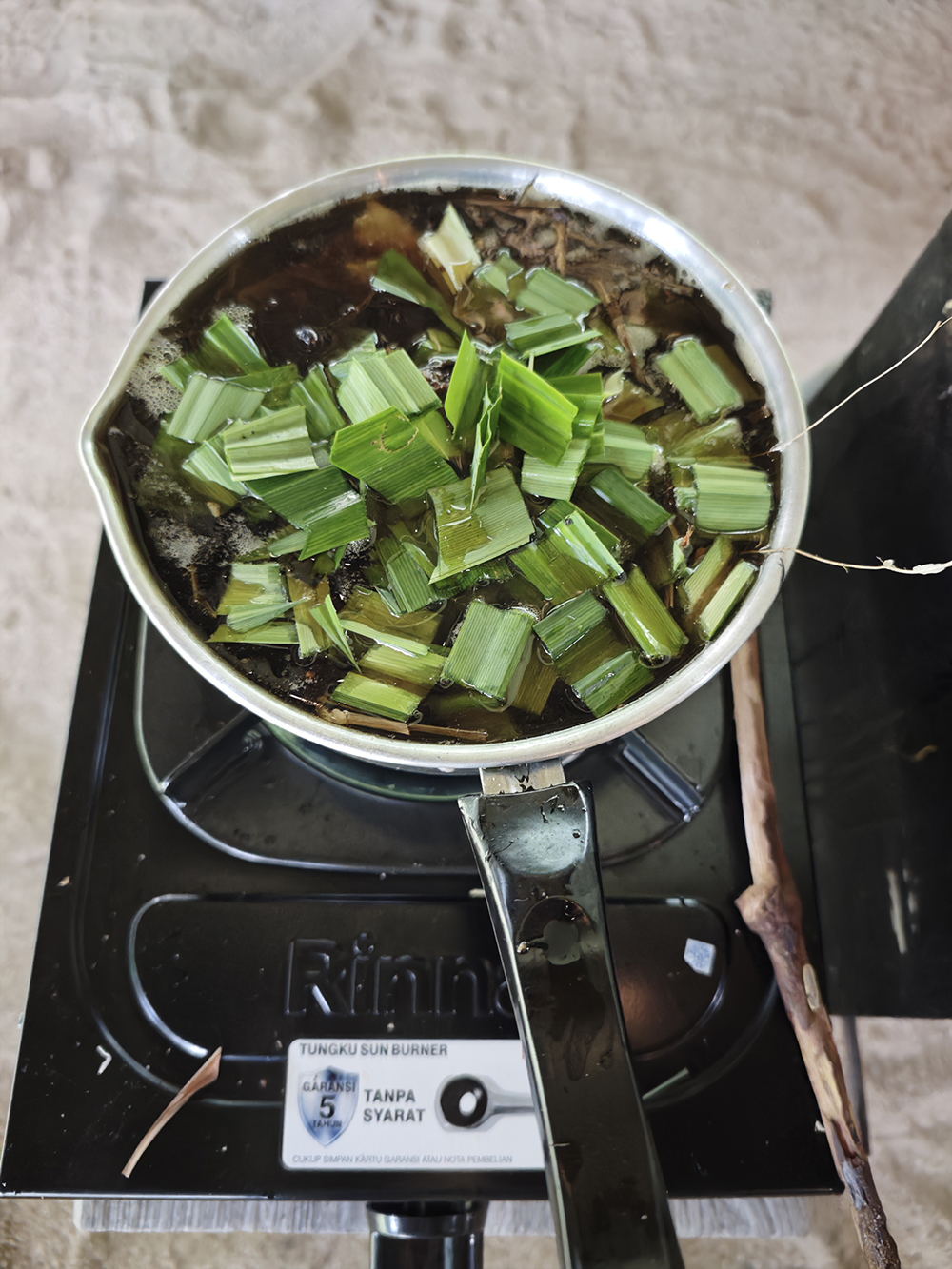
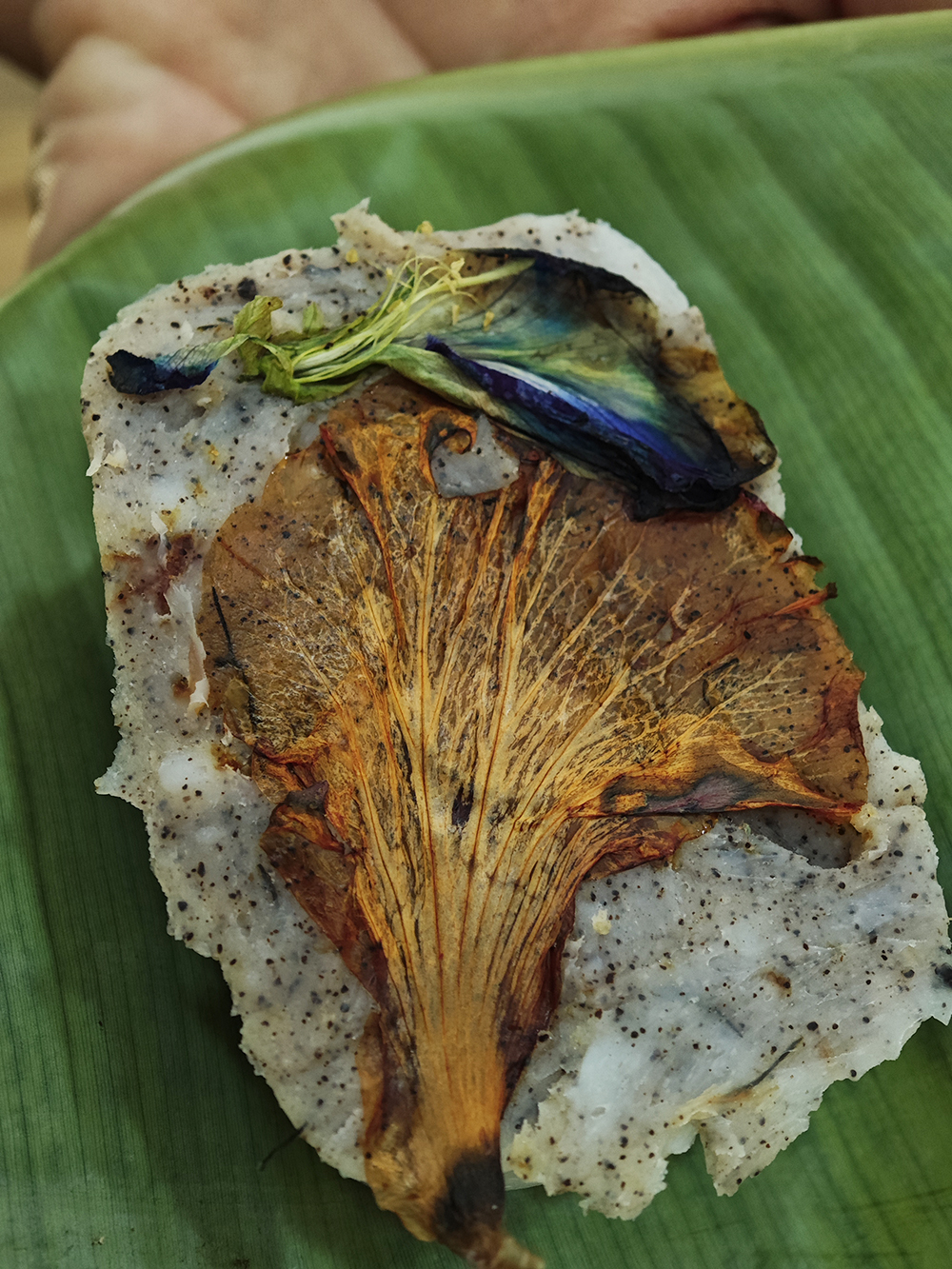
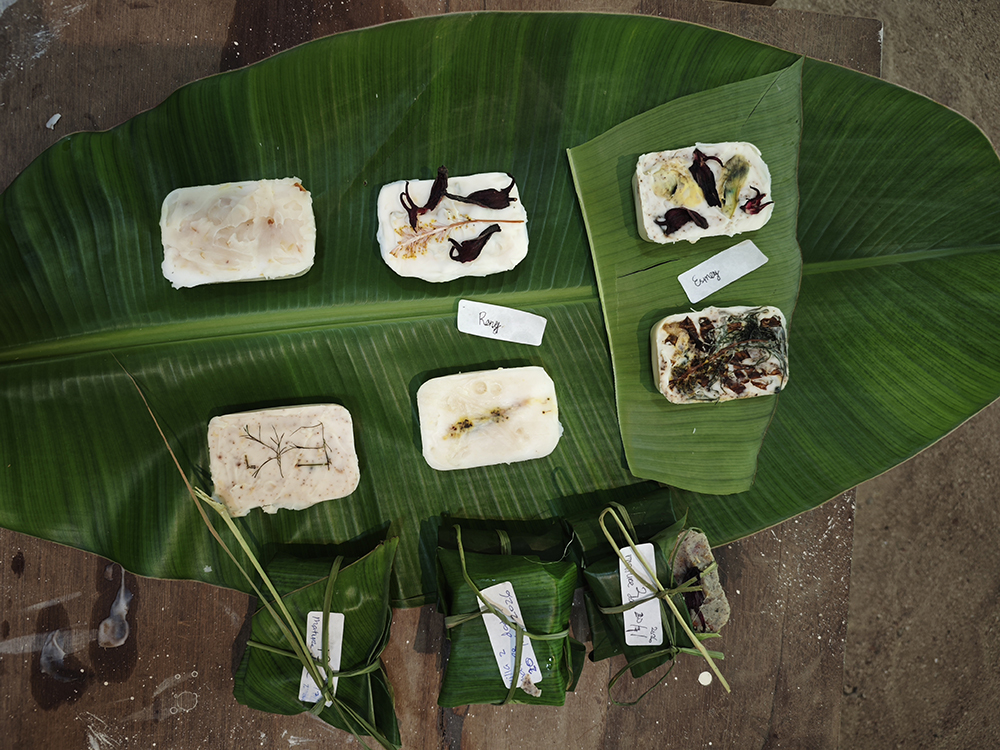
Between experiments with making art paper, I made artisanal soap using coconut oil, palm oil, and used cooking oil. Palm oil and coconut oil were ready to be used for artisanal soap, while the used cooking oil required time to remove its smell. Some spices and plants found at Nikoi can be used to remove odours through an oil-infusion process. Through my daughter’s research, we found that coconut shells, lemongrass, ginger, and pandan were all available on the island and produced satisfactory results. We successfully made used-cooking-oil soap scented with pandan.
The processes and ingredients involved in making soap and paper are similar in that they can be carried out alongside one another. As for bioceramics and bioplastics, other materials are required that could not be provided this time, so we decided to postpone those experiments. Instead, we focused on processing paper and oil into artisanal art paper and soap, whose possibilities could be developed more quickly and whose economic value is more tangible.
These three projects I worked on went hand in hand and seemed to share one common thread: mindful upcycling.
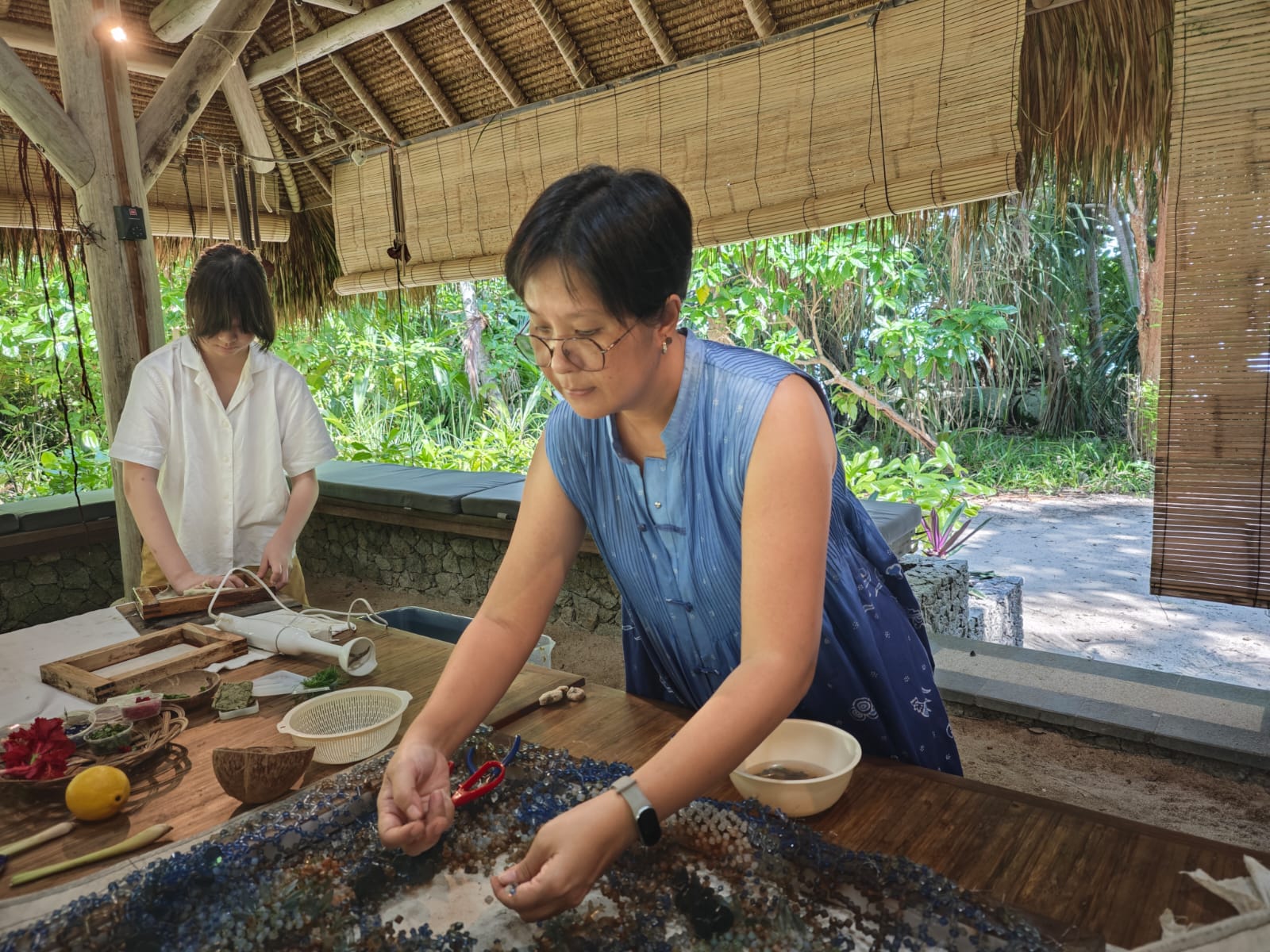
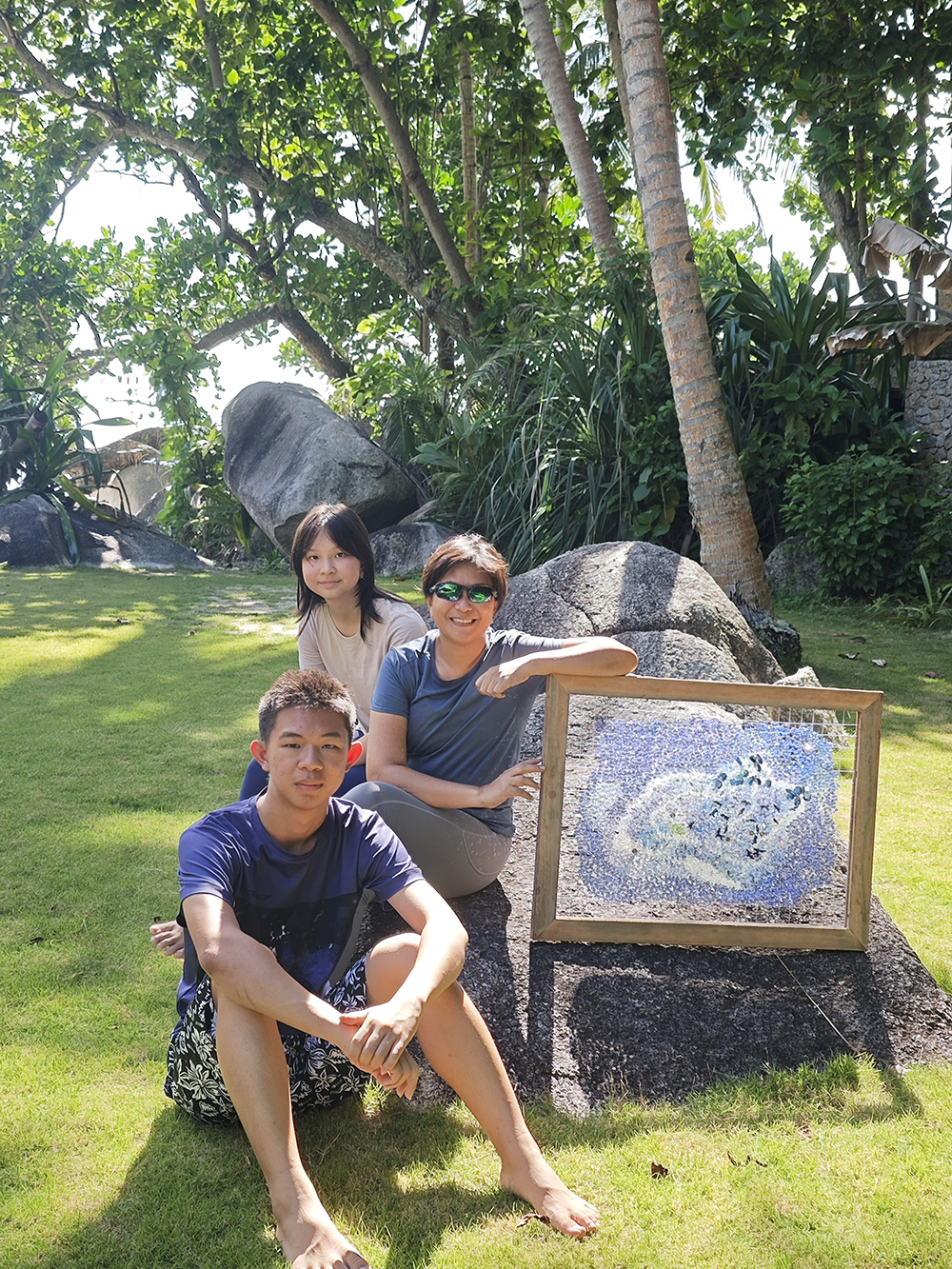
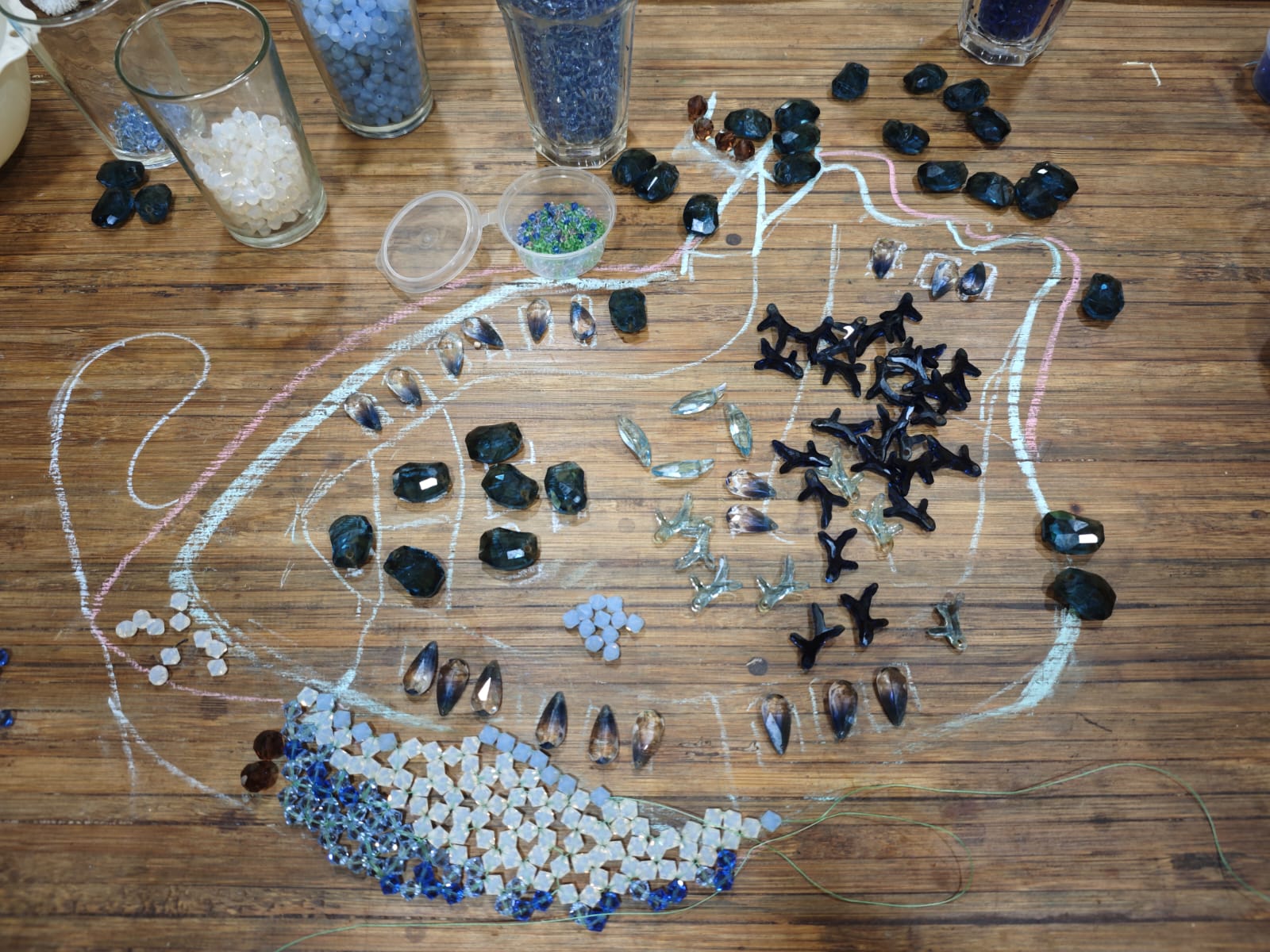
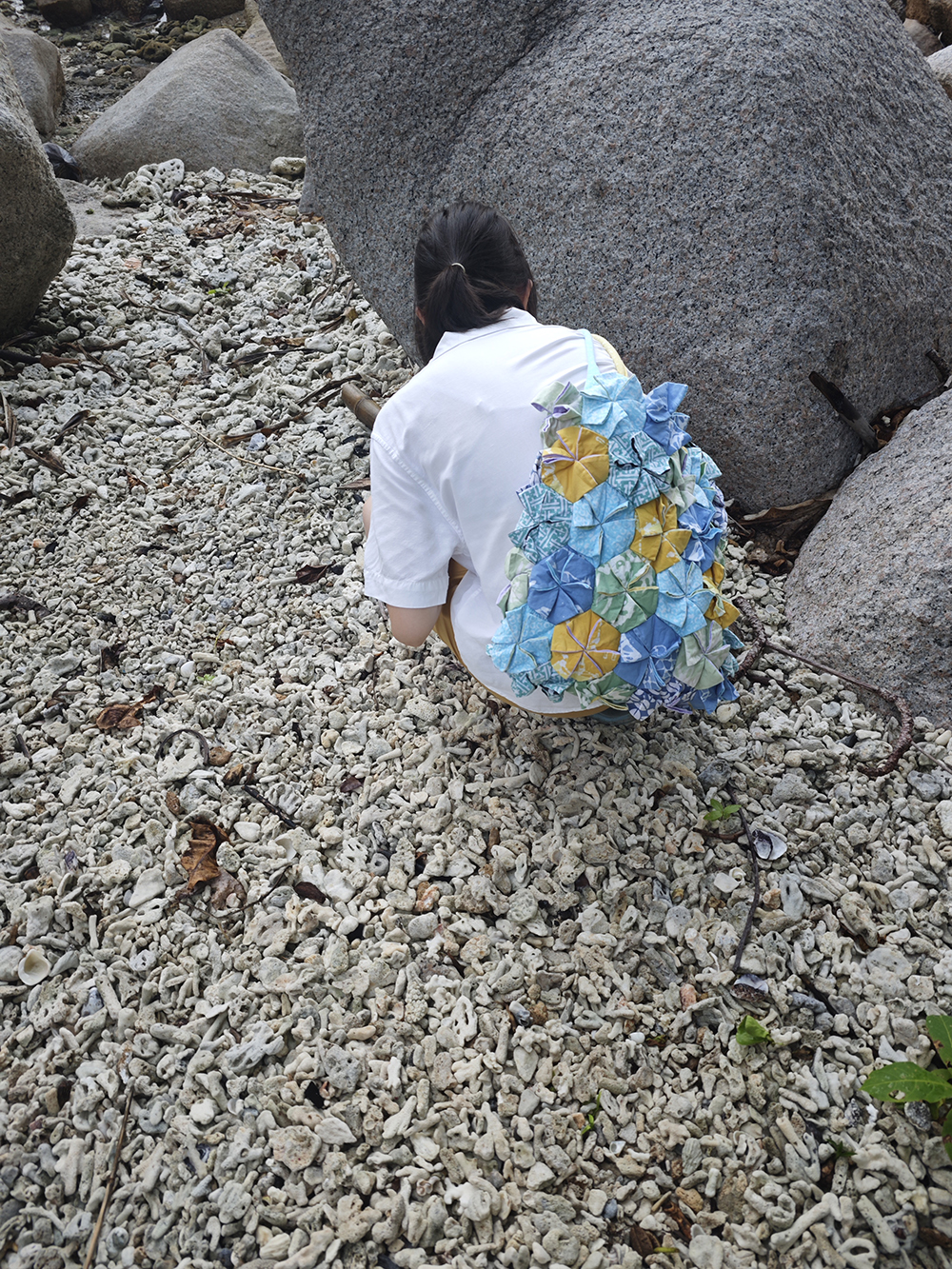
To repair my previous residency artwork for Nikoi, ANYAM NIKOI, we had to disassemble and wash the crystals again, as they had become dirty from salt and rust. I created a smaller, denser memory map, leaving a deeper impression of spatial memory and spatial markers. After the crystals had been thoroughly washed, I sewed the crystal beads together using a PE fishing line recommended by the engineering team. Working with my children was quality time that has been difficult for us to find. We sorted the crystals and sewed them together while waiting for the paper to dry and the soap mixture to harden. We were not simply sewing a map of Nikoi Island; we were sewing memories of Nikoi. This was mindful stitching.
Indirectly, this experience gave me a deeper understanding of cartographic memory through the visual memory map of ANYAM NIKOI.


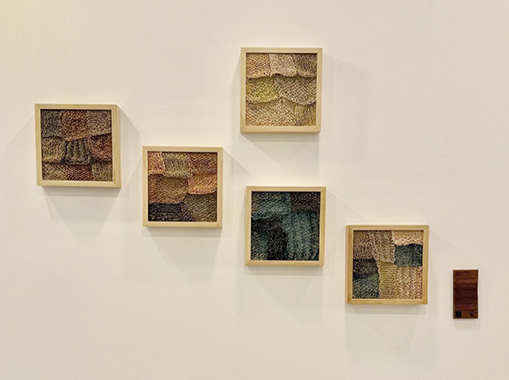
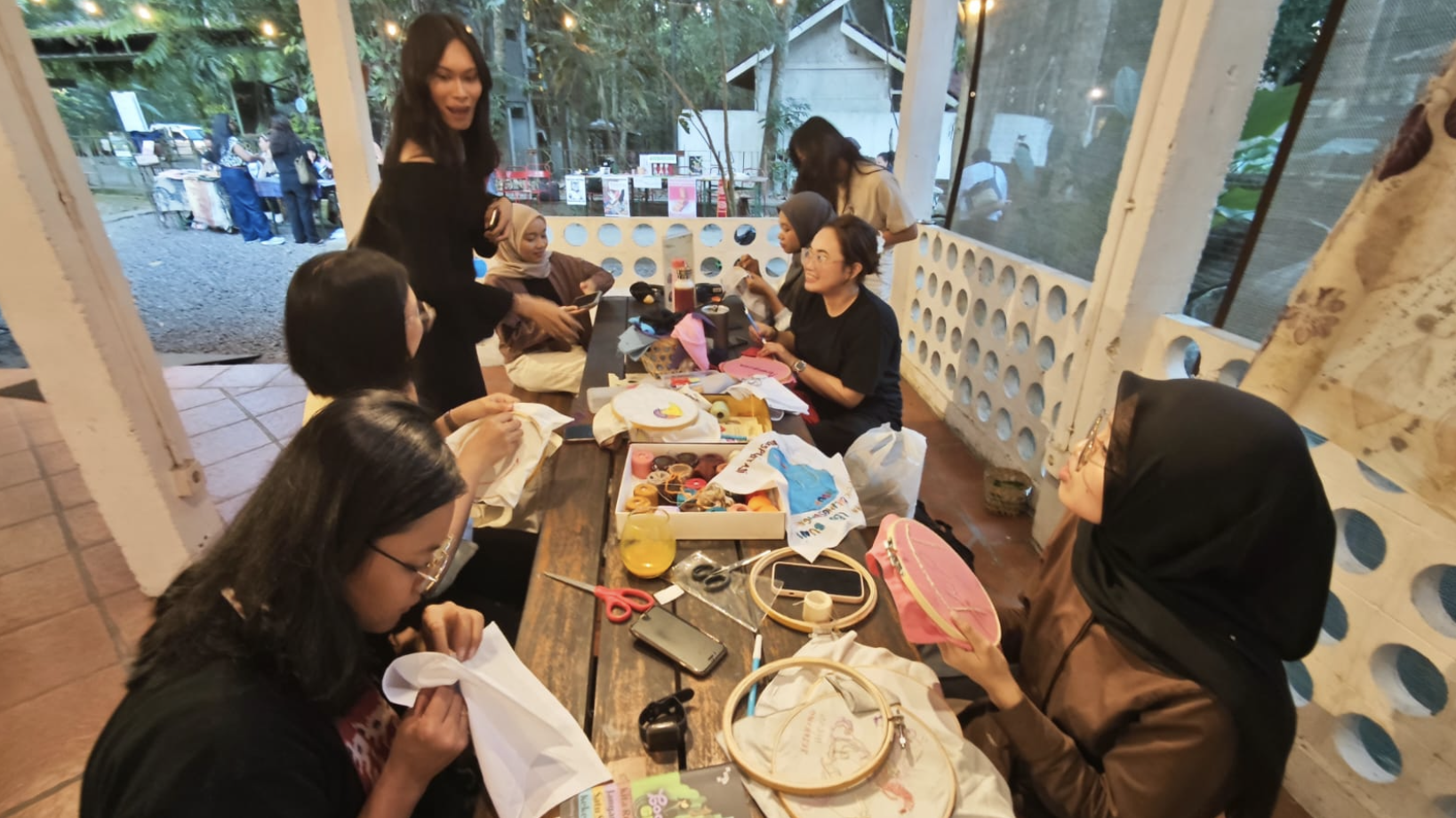
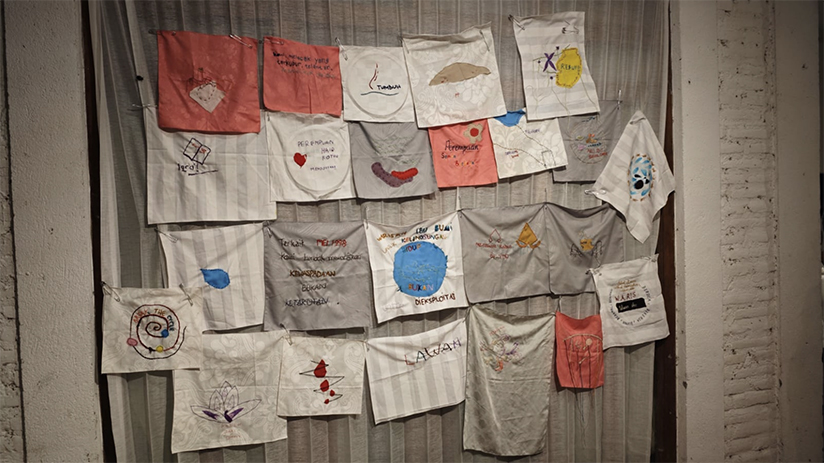
Ubah Rumah is an art residency and archive inspired by stories of our region.


